Categories
Blog

The Elusive Leopard

This morning before sunrise the sky is streaked crimson where the sun, just below the horizon highlights the thin clouds and Venus shines as big and bright as a small moon. The birds’ calls have a faint echo in the still air. I can hear the call of the male Impala close to camp as he brings together his female harem.

As we enter the park, we are joined by a herd of Zebra who are also entering the park, then we encounter a herd of cows who are just exiting the park after a night of grazing. The cows are quite frisky, especially the young ones who try to chase our vehicle, the fresh damp grass has given them a lot of energy, which has replaced the lethargic demeanor brought about by the recent drought.

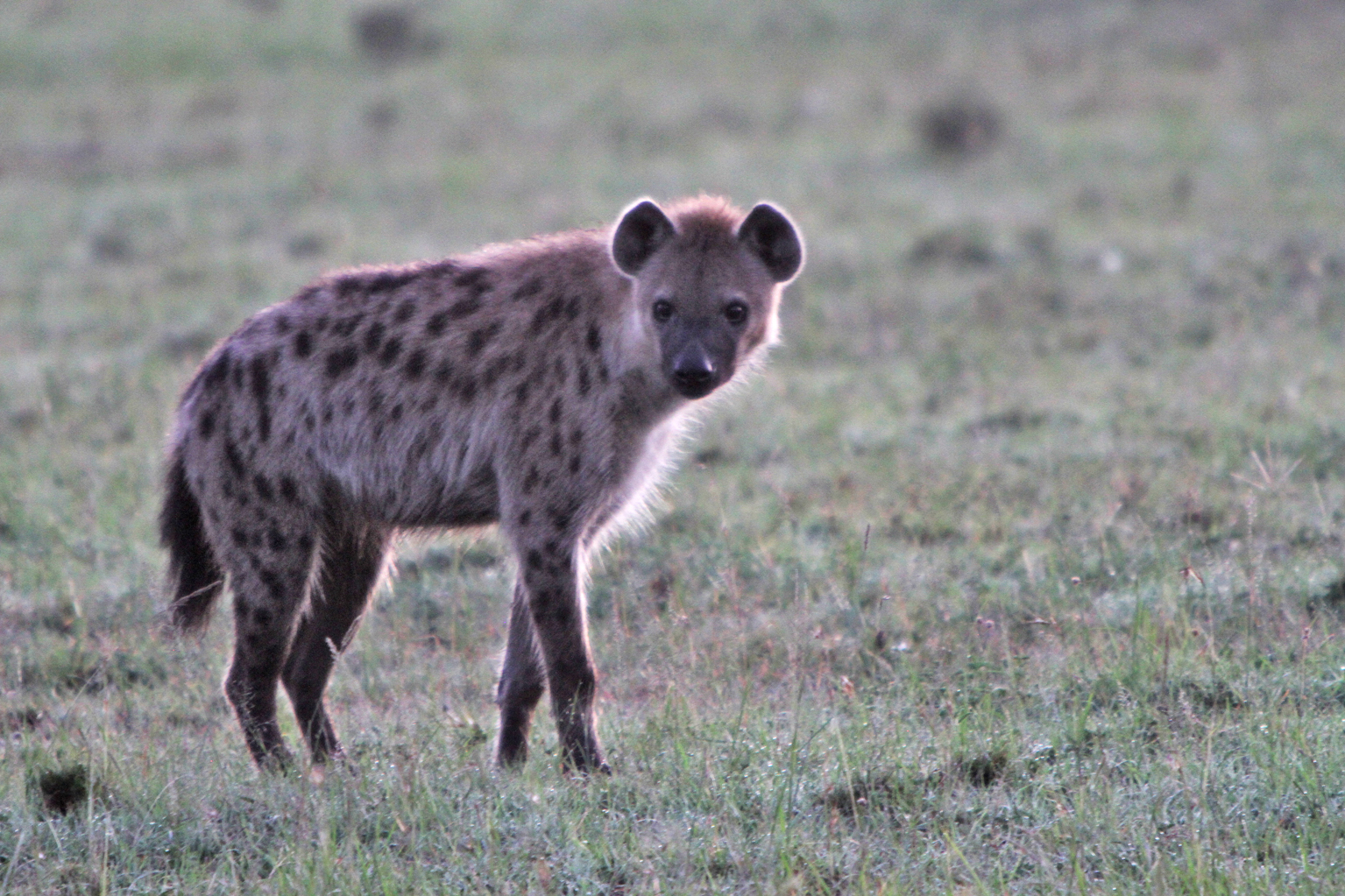
It is nice to see that the long grass that has sprung up from the rains has brought many of the plains animals back to our area. Herds of tommis’ with their constantly swinging tails, impala, Jackals, warthog, a few wildebeest, and this morning so many herds of Topi. We see three Hyena possibly walking home from their night activities, although the Hyena never left, from the camp you can always hear the distinctive calls of several groups during the night and the early mornings.

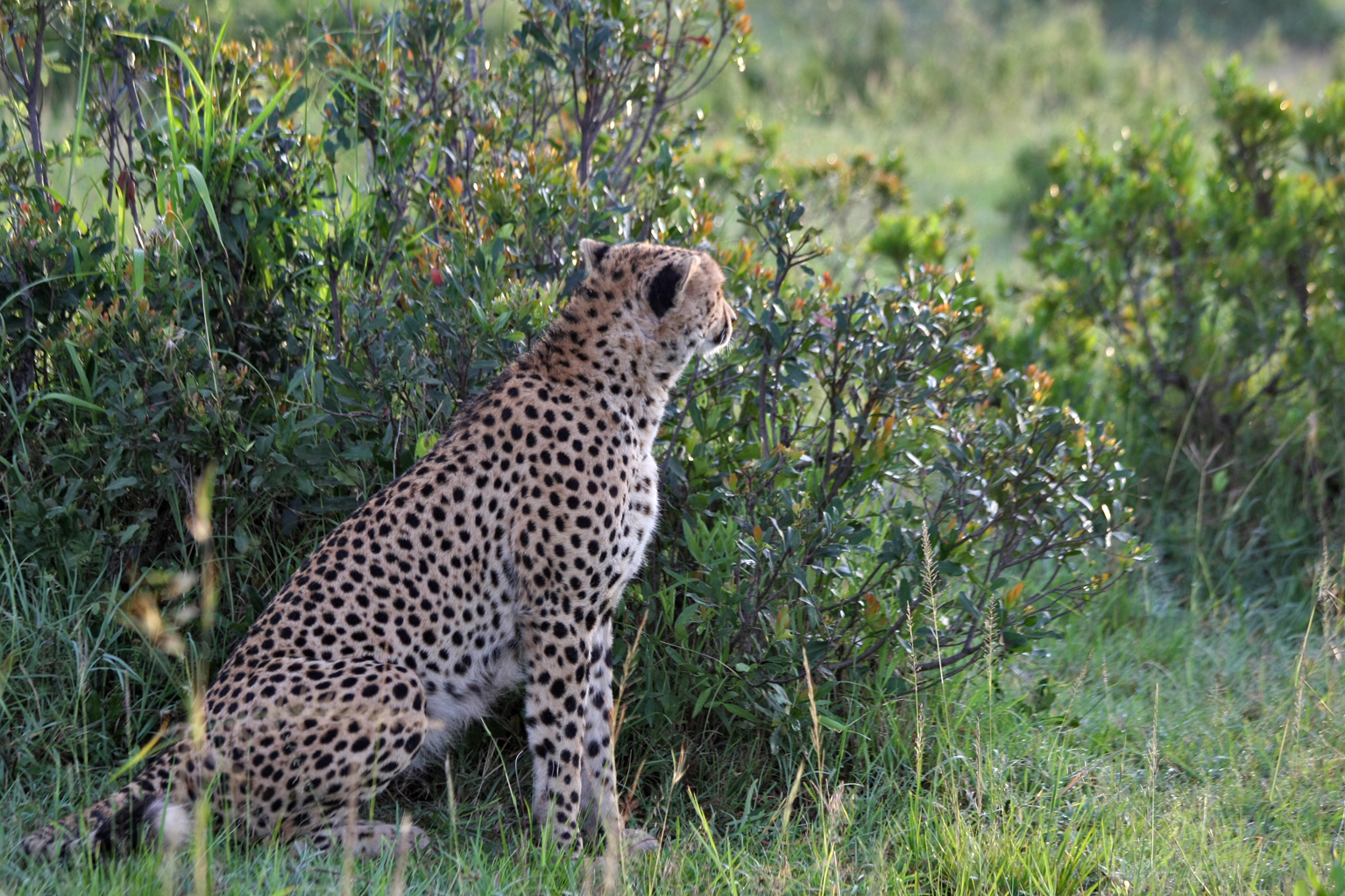
Alison did it again, just off the main road he spotted a cheetah in the bush a little distance away. He pointed to where the cheetah was but neither me nor Ken could see it, even when we were told where to look! The driver took us in closer and there he was laying in front of one of the several bushes in the area. Ken asked, “how did you see that, from the road?” he replied, “well he just moved his head.”

This was Olodupo, the male cheetah who lost his brother a while ago, this area around our camp is part of his territory. He has a large territory and has been spotted as far as the Serengeti in Tanzania, it’s nice to see him back and doing so well. From his position he could see Topi grazing a little further up the hill and Tommi’s grazing below however neither could see him as he was well hidden from them. He did at one point get up and took a closer look at the Topi, in one of the photo’s you can just see them in the background, but he didn’t seem too interested. 

It may be that the Topi are quite large antelope, it would be difficult for a single cheetah to take down. After a while we left him relaxing and headed off. I love to spend time with this cheetah, I could have stayed with him all day.

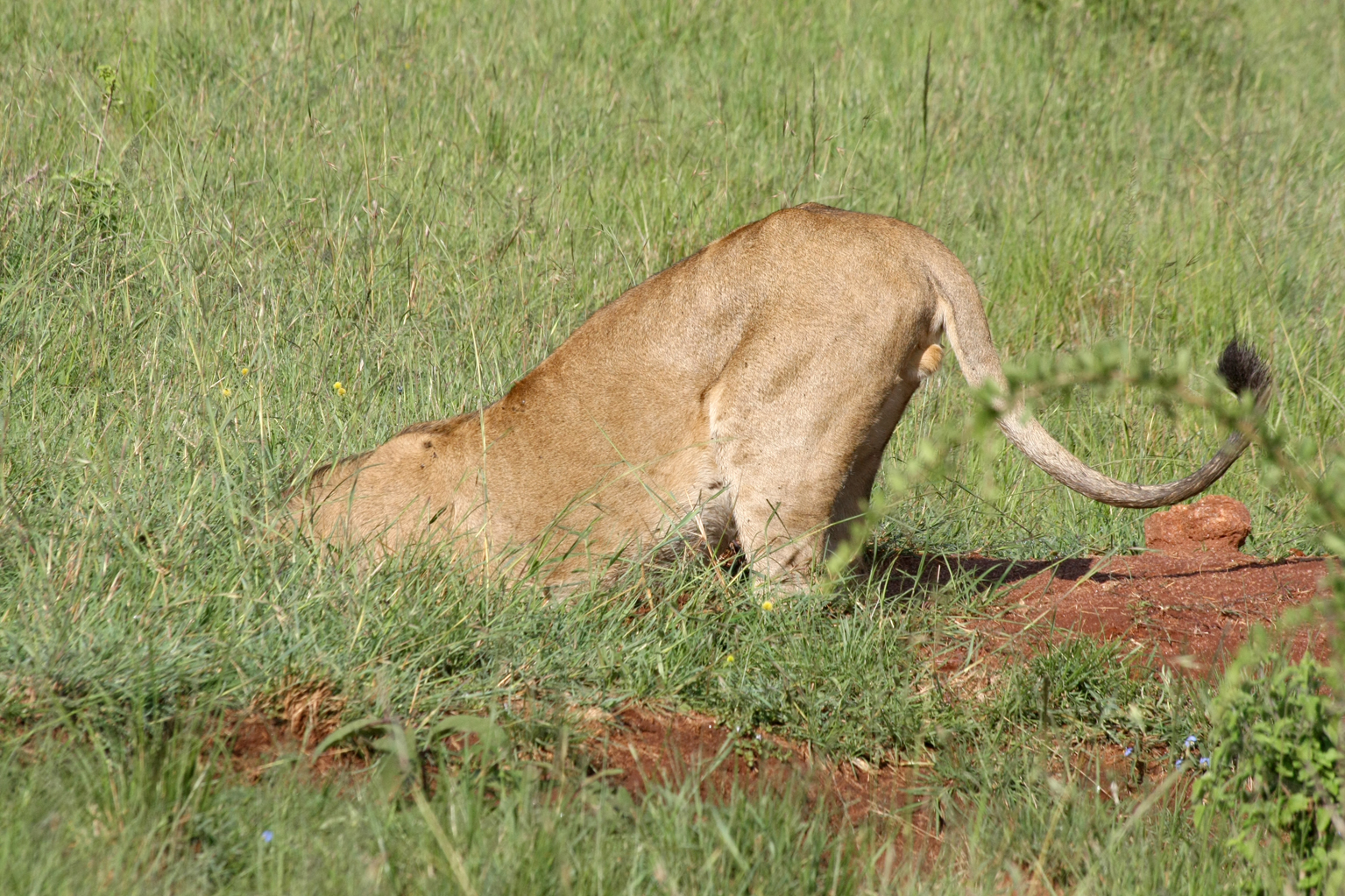
Just five minutes later we come across part of the Sopa pride, just at the side of the main road, 5 sub adult males and one young female, chilling out. I wonder if these young males are preparing themselves for leaving the pride and going it alone. There was a very large herd of buffalo on the horizon, some distance away, much too far to interest them, but they were interested in 5 buffalo on the opposite side of the road who were occupied with drinking and rolling around in the river.
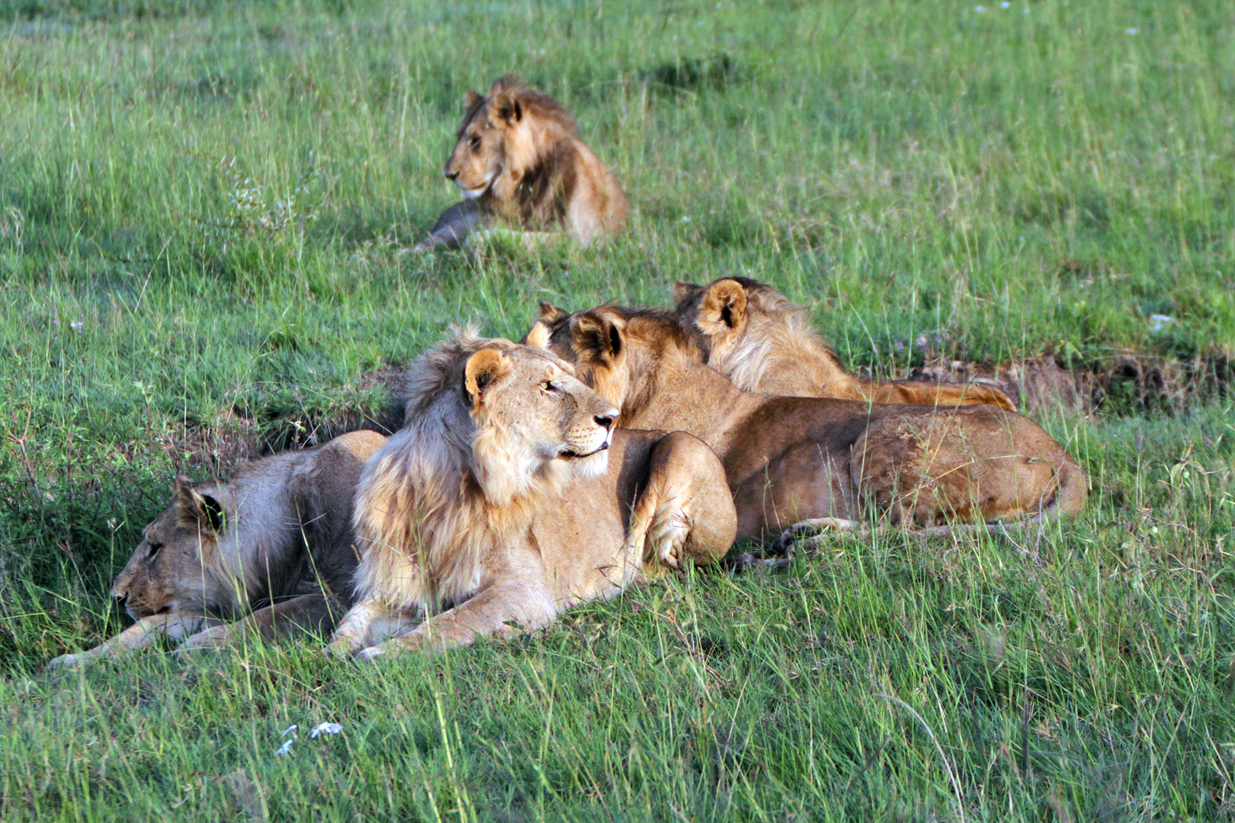
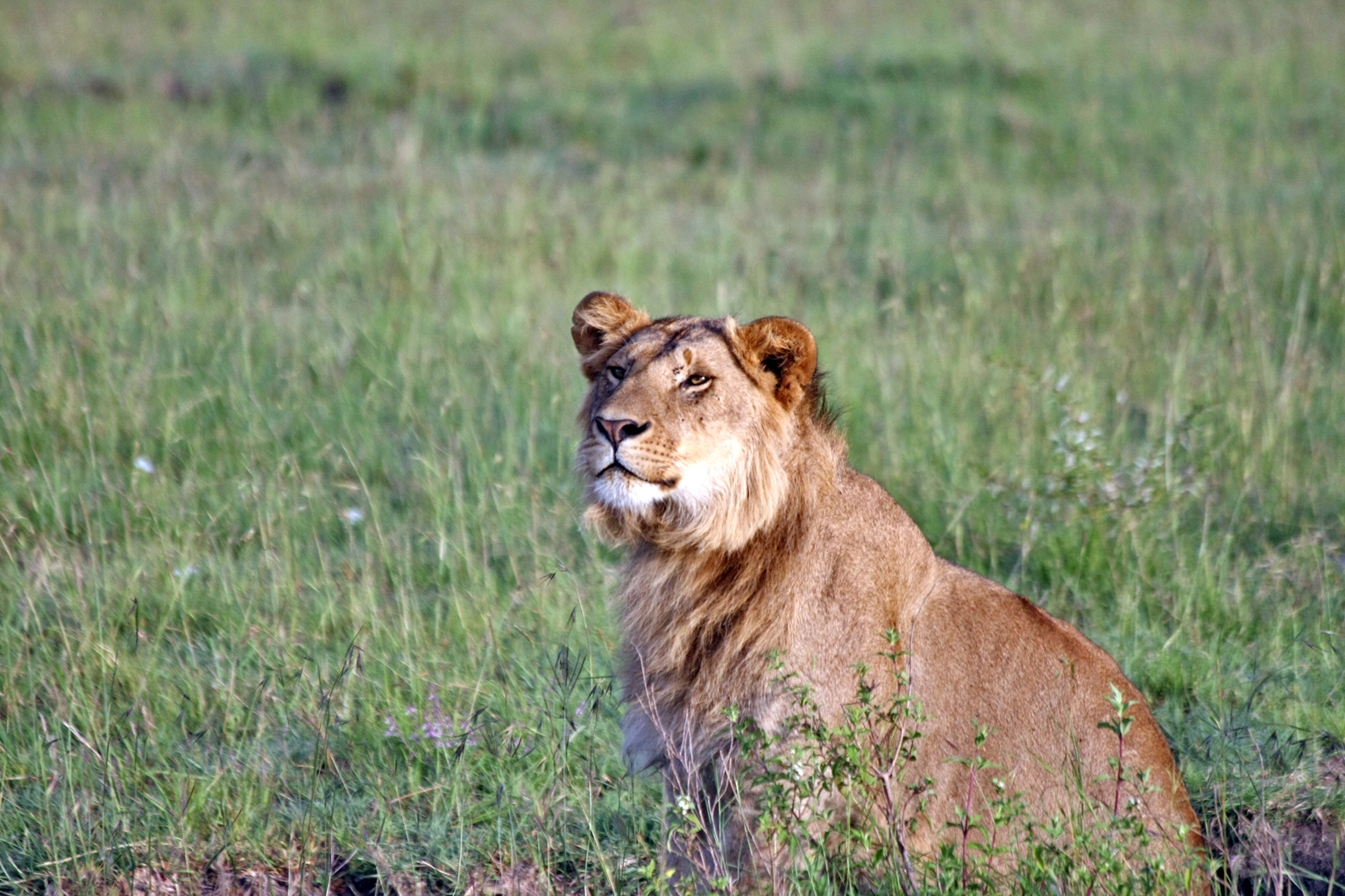
These buffalo were a considerable size and looked especially grumpy if not a little menacing. I’m sure they could smell the lions even if they didn’t see them but were not in least bit worried about the lions being so close and continued with their own activities. One of the lions got up to take a better look. When a male lion stares at you, even a young one it is time to be worried, this lion was staring intently, sniffing the air, and licking his lips, but it would have taken a coordinated attack from all six of them to bring down just one of these buffalo and the others didn’t seem interested, maybe they looked at the buffalo and didn’t like the odds.

It is amazing to think that all these animals, going about their daily business, is happening on our doorstep, living out their lives so close to, and intertwined with ours.

We head off the main road and onto the tracks that would normally take us to the blackrock females, we have not attempted these tracks since the rains, but they seem to have dried out enough now for us to attempt them. There are places still where the driver must stop to assess the possibility of getting through. This involves a lengthy discussion between the driver and the guide, in Maa, so we have no idea what they’re saying, then they get out of the vehicle to take a look, test the ground, and see how deep the water is. When they get back and start up the vehicle and we still don’t know what the decision is I have to ask, “is it bad?” the answer is generally “Yes, but not much bad” even when to me it looks very much bad. Only once this morning did we have to turn around and find an alternative route, so I have come to trust their judgement in these situations.

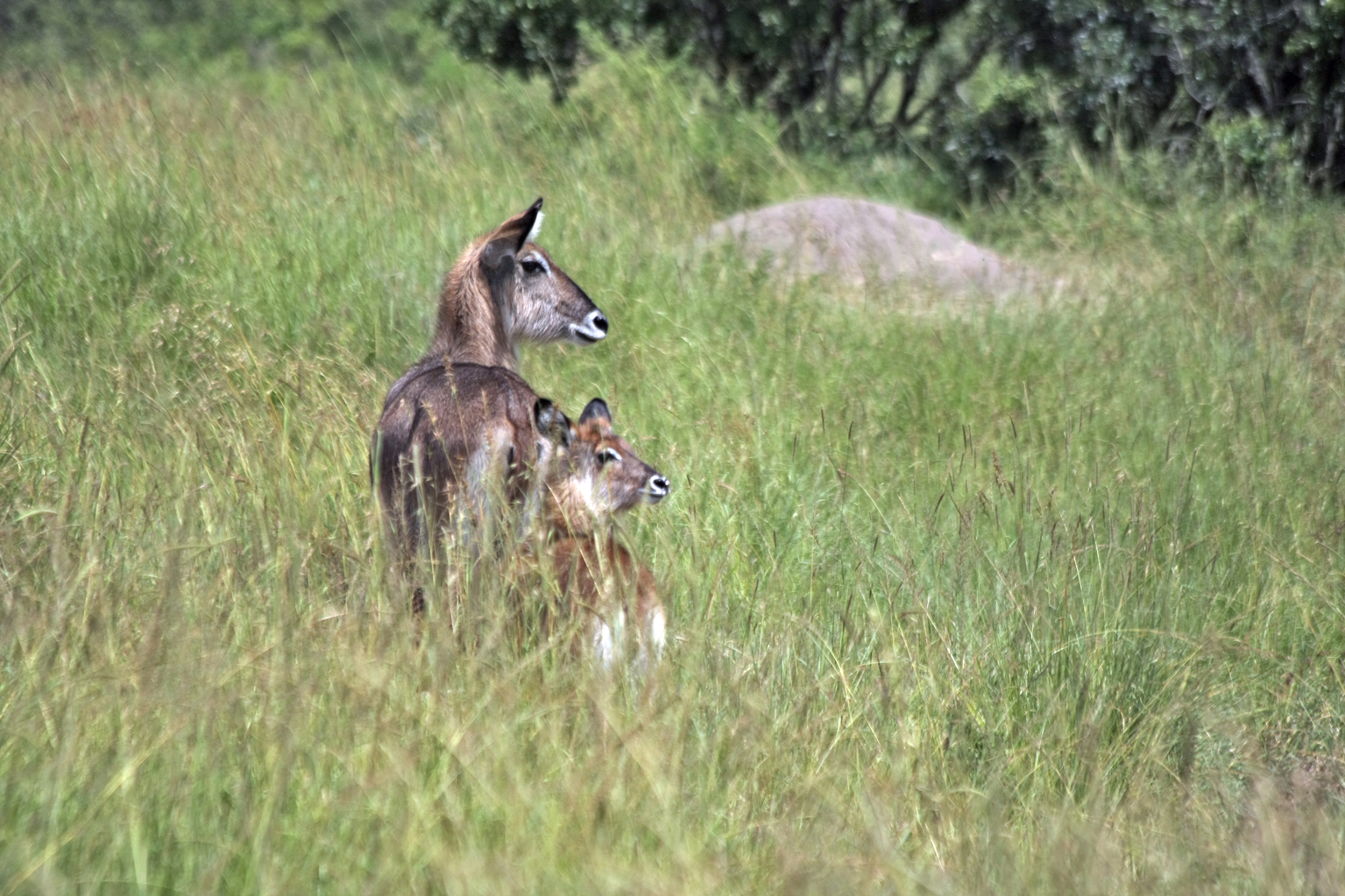
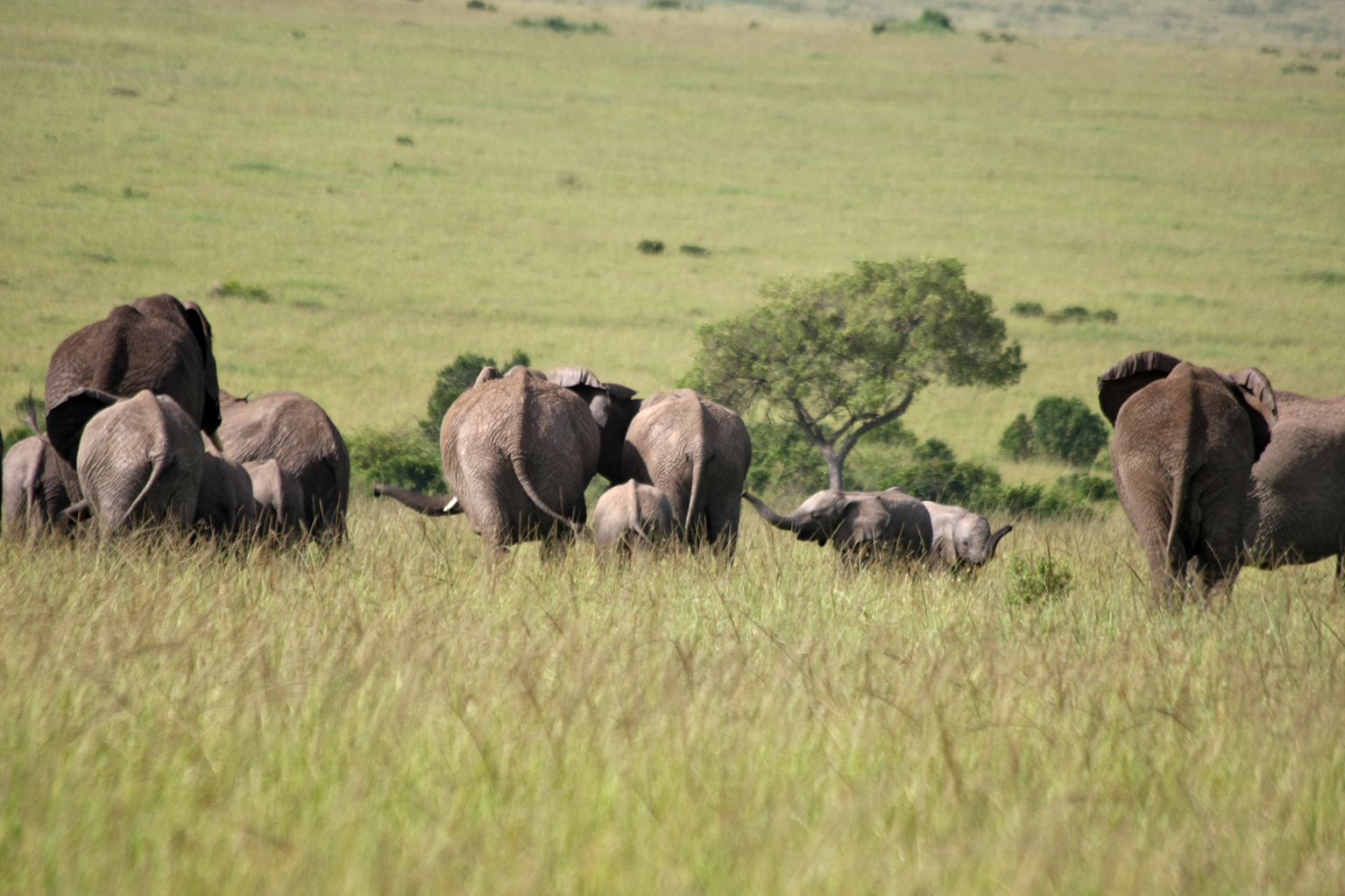
On our way to the blackrock territory we pass a herd of elephants, clearly an extended family as they are of all sizes and ages, including little ones that can only just be seen in the long grass. Also a family of waterbuck, a mother, father and young one, including a Giraffe in the background. I think the Waterbuck is the best looking of all the antelope. You can see how long the grass is, reaching the body of the Giraffe covering his long legs. In some parts the grass is taller than I am.

One surprise of the morning was the number of small white butterflies hovering above the long grass gently swaying in the soft, warm breeze, and the sweet-smelling bushes, putting on a lovely display. Hundreds of them, mostly white but on closer inspection have patterns on the tips of their wings in bright orange, yellow or black, the odd one or two completely orange or yellow. It was captivating.

The blackrock females are not around, after searching and making a few phone calls to see if anyone has seen them, we find out that they are in an area that is closed to all vehicles, so we are not able to see them today.

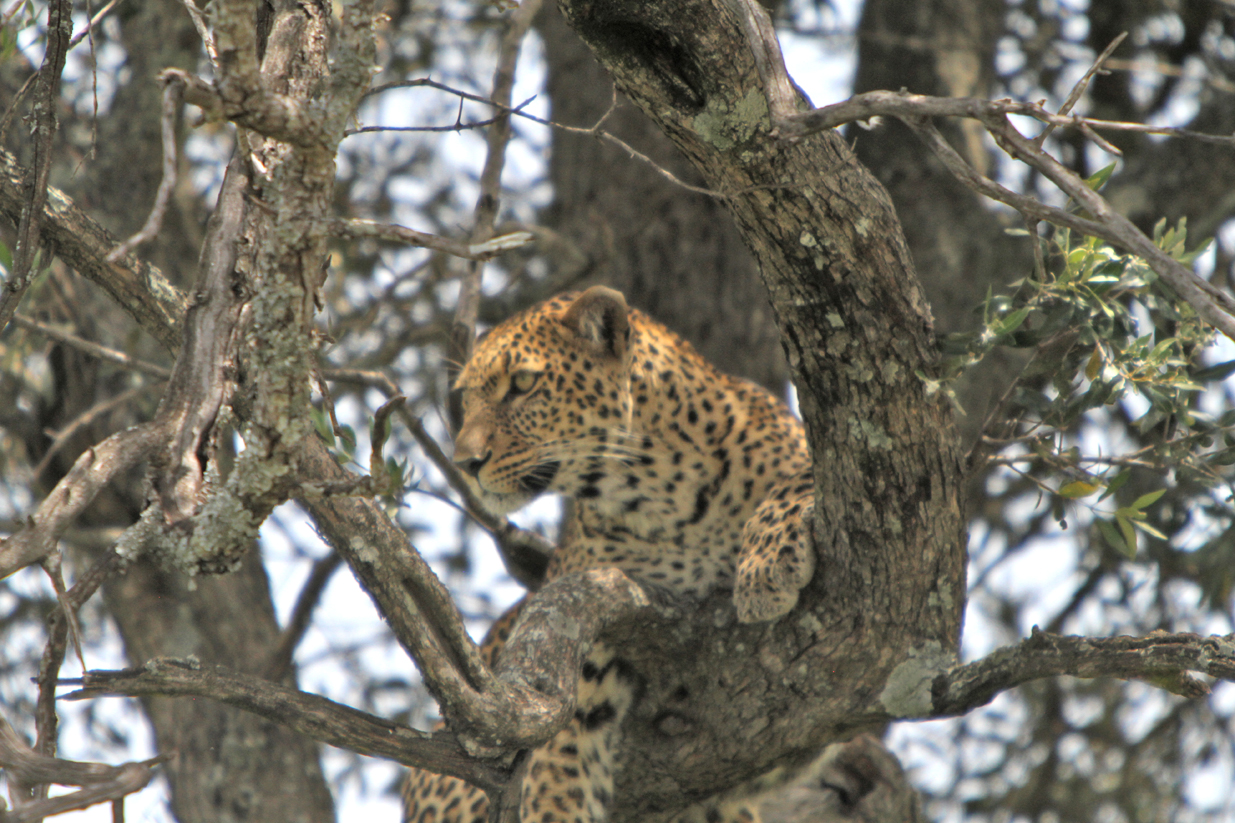
 

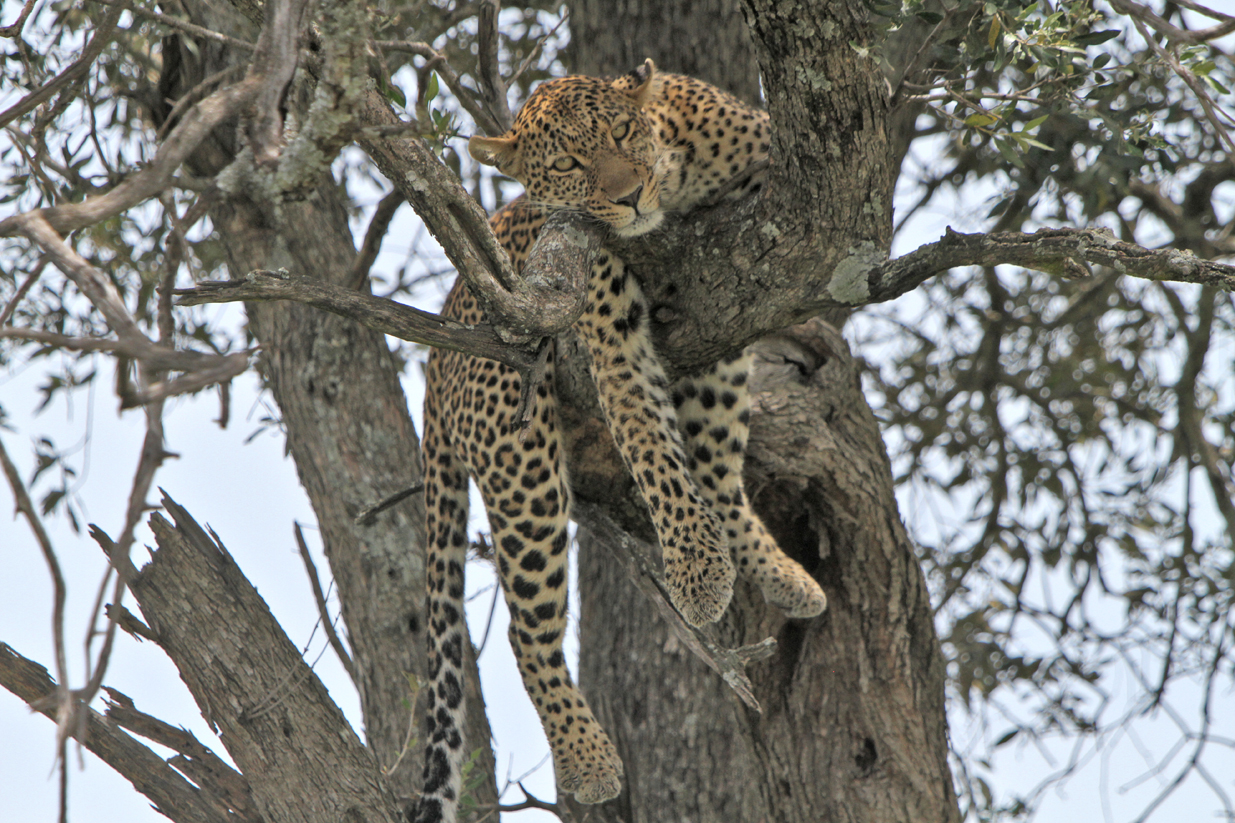
Instead, we go to find one of the Leopards. Alison is not sure which Leopard we will find as there are two females whose territory overlaps a little. When we find her, it turns out to be Kazuri, resting in a tree, the last time we saw Kazuri she was doing the exact same thing. She wasn’t doing anything, but she is so beautiful it is a pleasure to just sit and look at her. Leopards are so elusive that you need patience and a little luck to find them.

. Since Leopards don’t need to eat every day, especially if they live on their own, if they kill a mid-sized animal like an antelope, they can stash it in a tree, and it can last them up to seven days. So, to see a leopard hunting is very special and you need even more luck and of course time. Time is something we didn’t have today, and it is necessary for us to head back to camp.

Ken wouldn’t forgive me if I didn’t mention some of the birds that we saw today, he loves to photograph the birds.

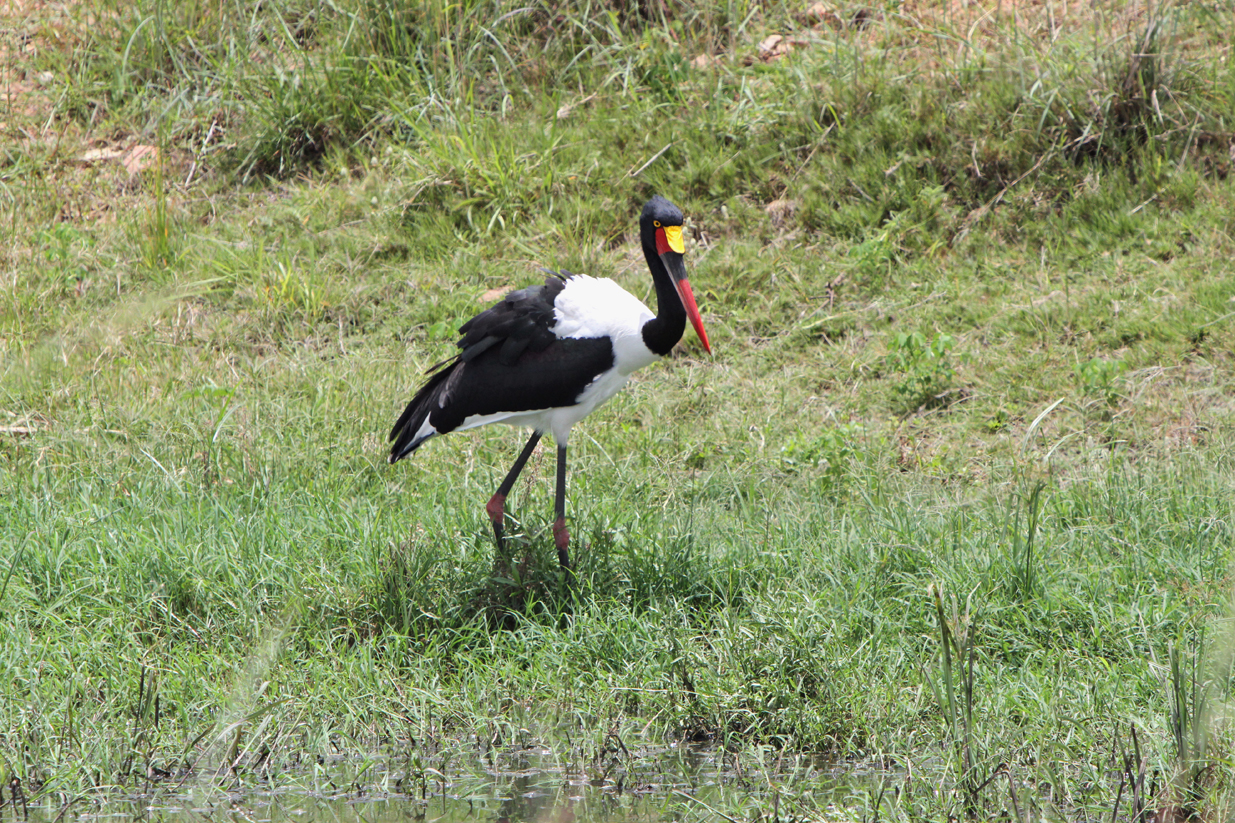
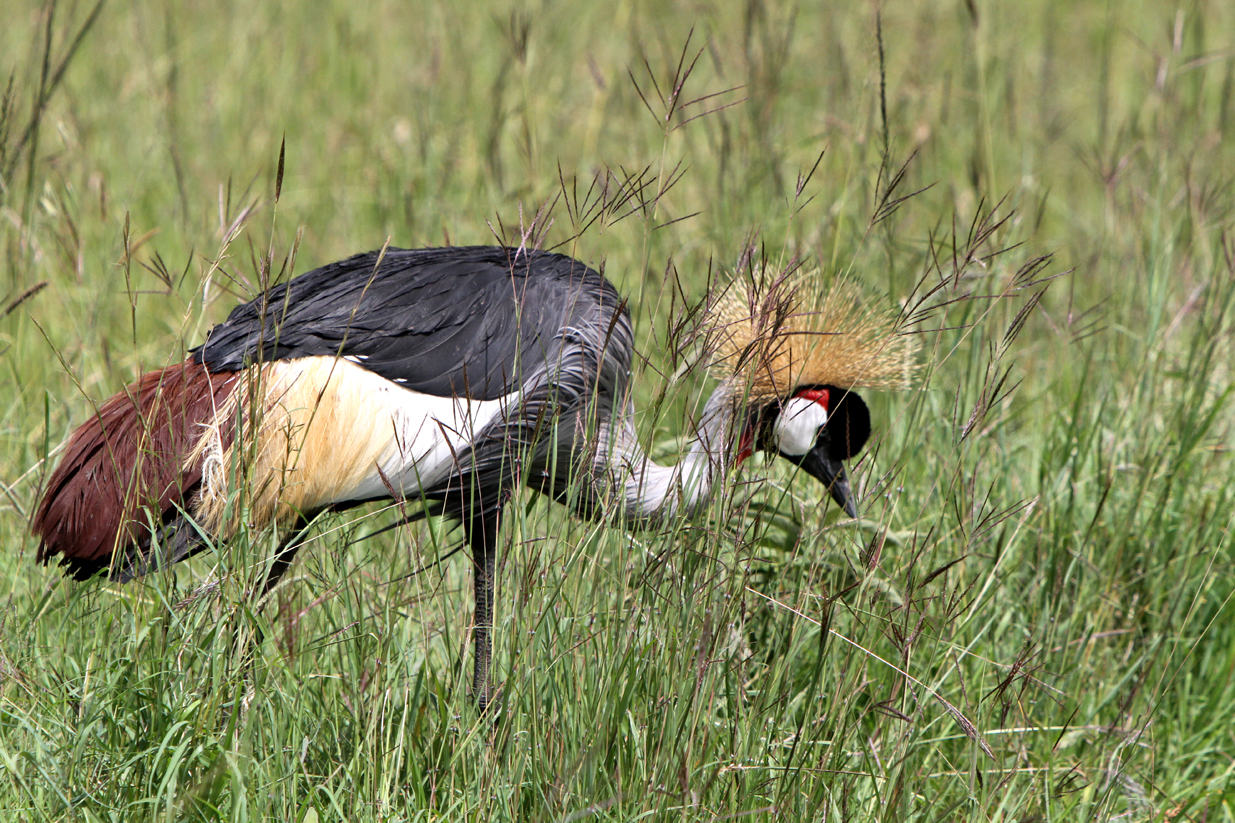
The first photo is the Grey Crowned Crane which is normally found on the ground, but this morning was perched at the very top of a tree, whose spindly branches didn’t look strong enough to hold him. The second photo is a Kite, the third a blue starling that was picking up crumbs from our breakfast, the fourth three beautiful bee-eaters and the final photos are of a saddle billed stork who has a very colourful and very long beak for catching his food in water and a heron who also feeds on insects and small mammals found in water.

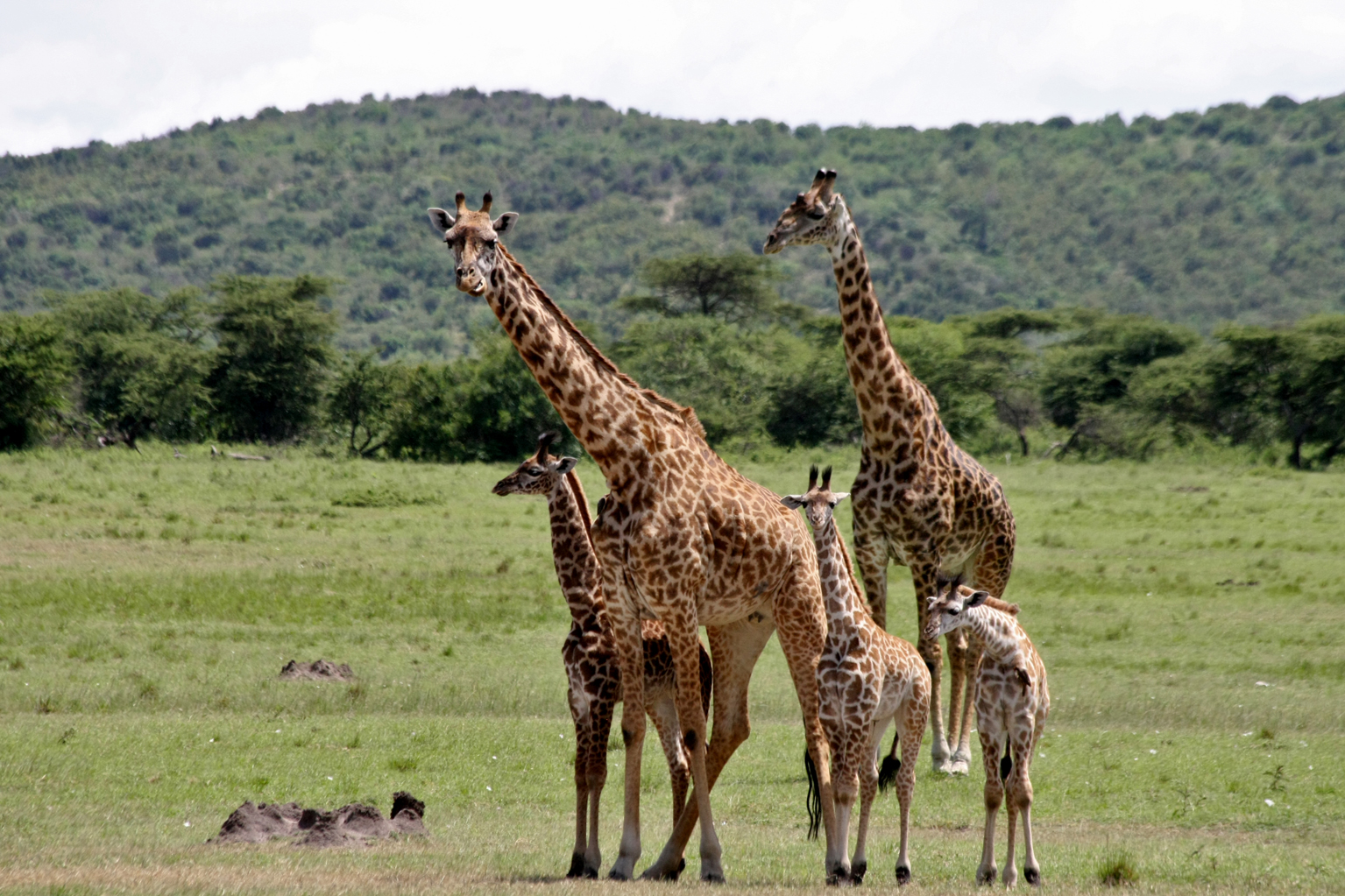
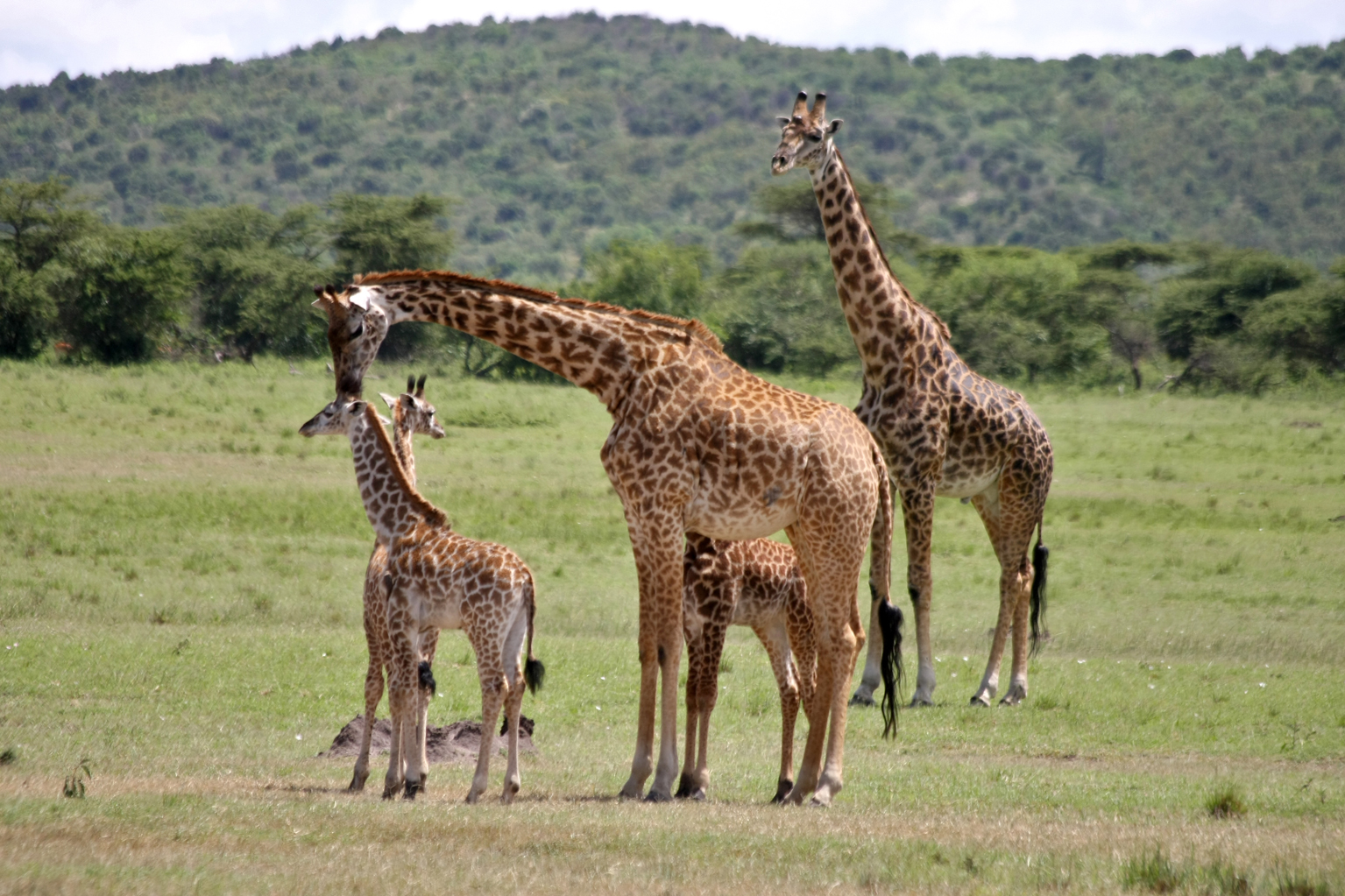
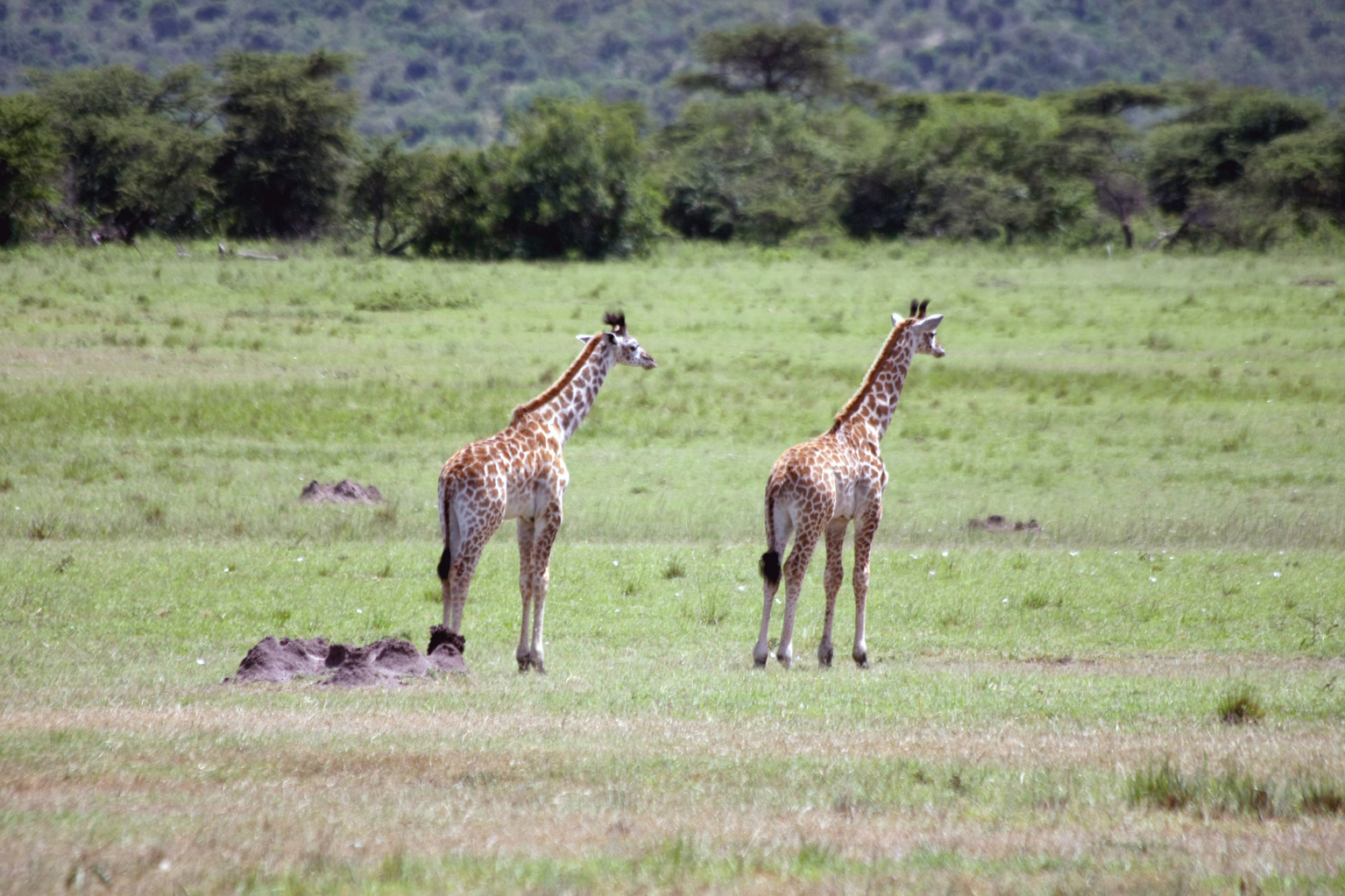
Just before we reach camp, we see a family of Giraffe. There are always Giraffe in this area, this is another animal that never left, but what was unusual about this family was there were three young calves, Giraffes usually only give birth to one calf at a time, and only rarely do they have twins, two of these calves did look like twins and I’m not sure about the third one, whether he was older, or even belonged to someone else. Well that’s all for this week, I hope to be out again next week.

Categories
Blog

Blackrock Pride

So to continue, on our way to the lunch spot, which only Alison and the driver know as yet, we see a herd of Elephants on the plains to our right. One family is out in the open, grazing, they have a baby with them that is only just about visible in the long grass and another, slightly older but still young takes a long look at us as we stop to watch them. The rest of the herd are all together in the shade of a lone tree. Even though it is still a little misty and cloudy, when the sun does break through the heat is intense.

We continue on and as we ascend a hill, the only one around for 100’s of metres I just know this is our lunch spot, the views over the surrounding plains, the sand river and the hills of Tanzania are amazing. Even though it is warm and sunny at our lunchtime restaurant we can see the rain coming towards us from Tanzania to the south. When we reach the top and stop at a bush Alison points out a large depression in the grass around the tree, he tells us there has been a lion resting here recently and so he checks out the area to make sure there are none still around before we start to eat.

After lunch it was decided we would see what the tracks were like in the blackrock area, to see if we could get close to the Lions. On the way the driver stops the vehicle because Alison has seen something in the distance, a quick look through the binoculars confirms it’s a lion lying in the long grass next to a small rocky outcrop. How he managed to see this from the distance we were from it I don’t know, I guess that’s what makes him an excellent guide. The only problem is, we had just forded a deep water hole, all depressions at the moment are filled with water, even the tyre tracks, some shallow and some like this one deep. Quite a few larger holes had been waterlogged for so long that they had water lilies growing in them.

I thought we were lucky to get through it the first time, but now not only do we have to go back through it to see the lion, but we also then must do it again to get back to where we are now. The guys thought it would be okay so off we went. We found a single male sub-adult all by himself, this is unusual as you would normally find sub-adults as part of a pride or as part of a group of them. We searched the surrounding area to see if there were more, but he was definitely on his own. So back through the water hole.


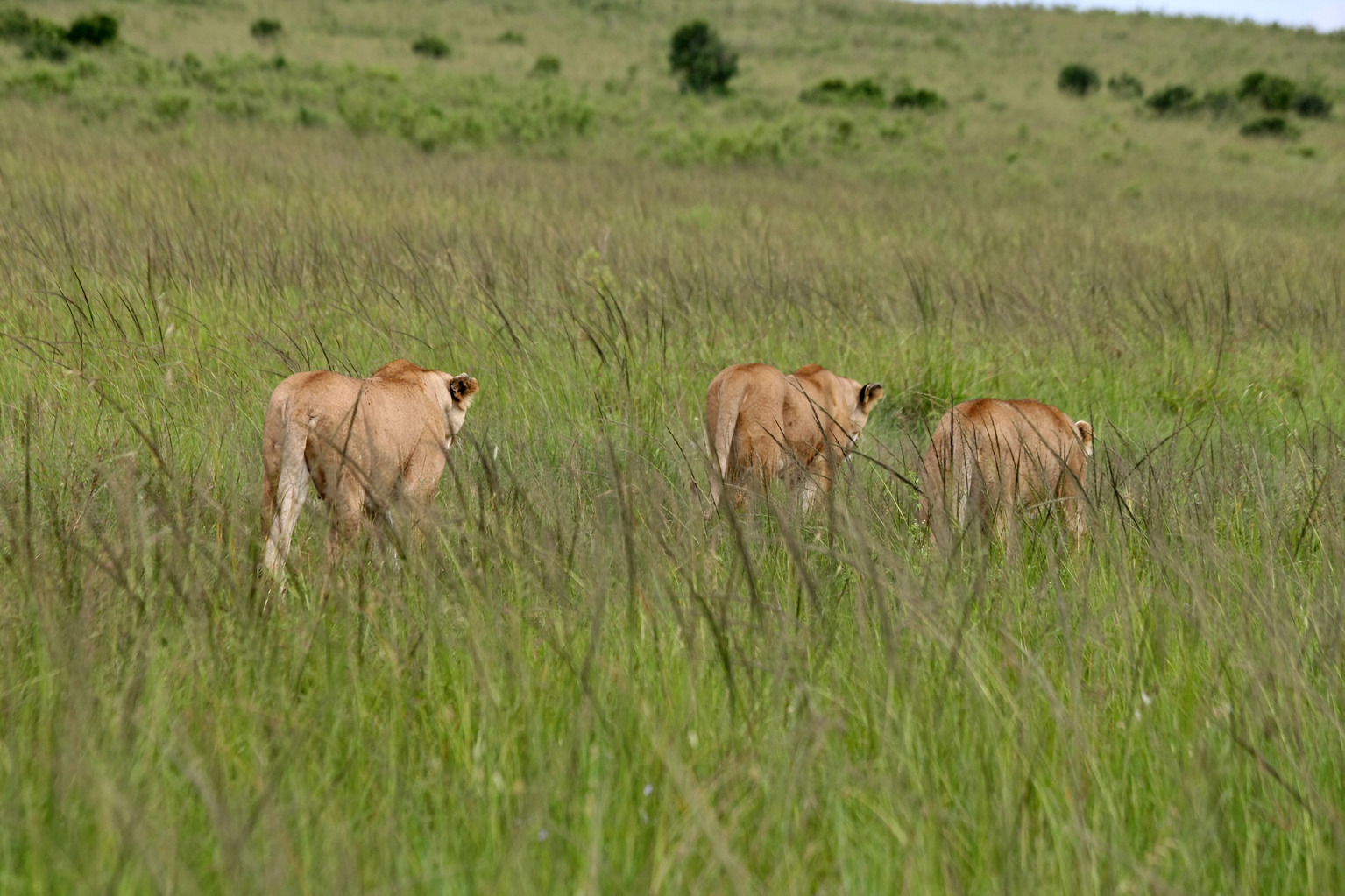
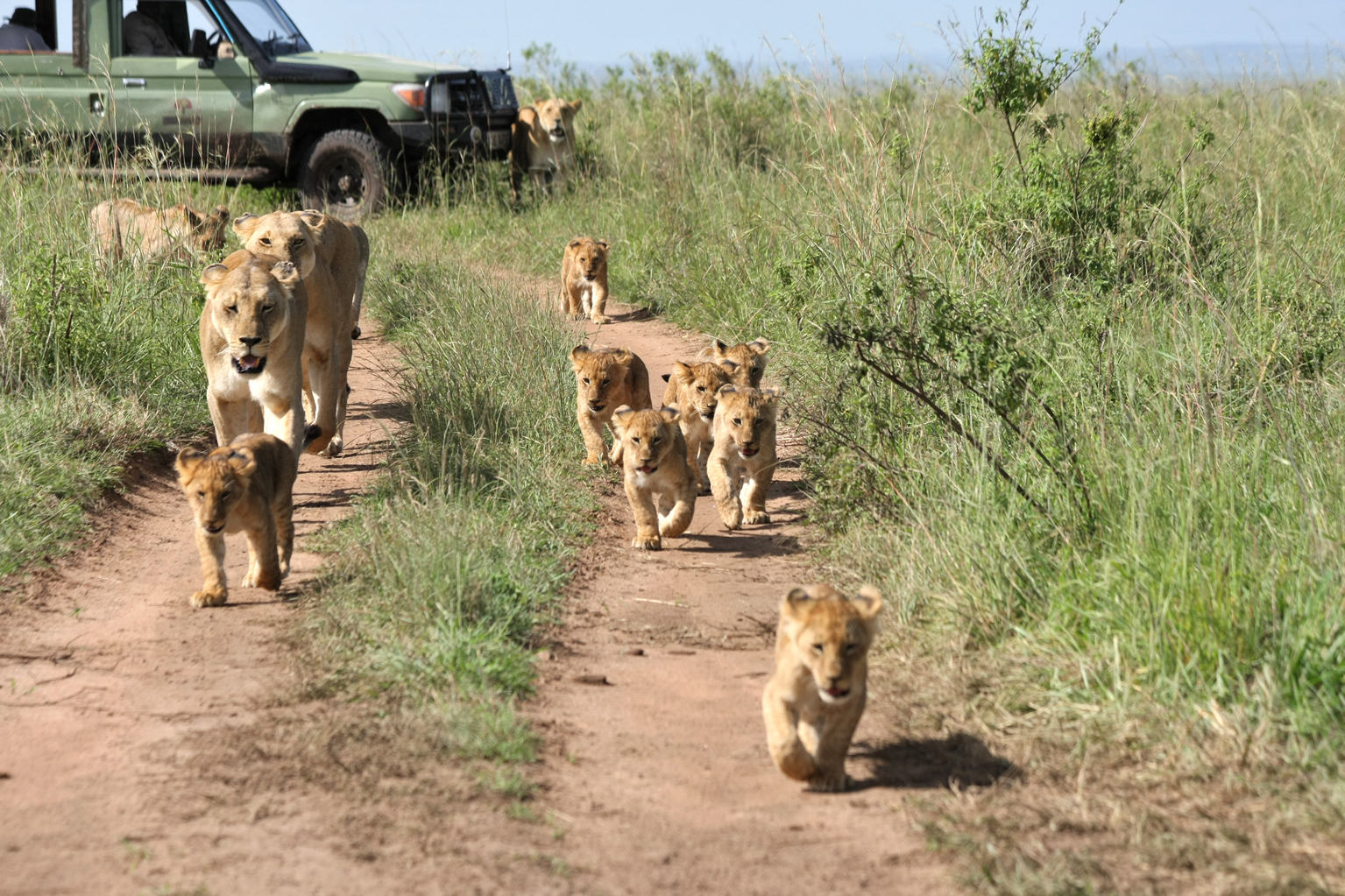
We found the tracks to be fairly good, not as bad as the Talek area, and when we reached the blackrock females there were already a few other jeeps watching them, it felt like they were waiting for us because as soon as we arrived four females were just getting up and started to walk to the rocks in the distance. All four females were mothers, so we guessed they were going to where they had hidden their cubs.

As they moved towards the rocks, they walked very close to two elephants with a baby. The lions were not at all interested in the elephants, but the elephants didn’t appreciate the lions being so close to their baby, they showed their displeasure by flapping their large ears and making a loud trumping noise, charging at two of the lions and chasing them away, even the baby joined in. What they didn’t at first realize was that the other two lions were coming up behind them. When they did finally see them, they got the same treatment, the lions retreated to the rocks and the elephants went quietly on their way.

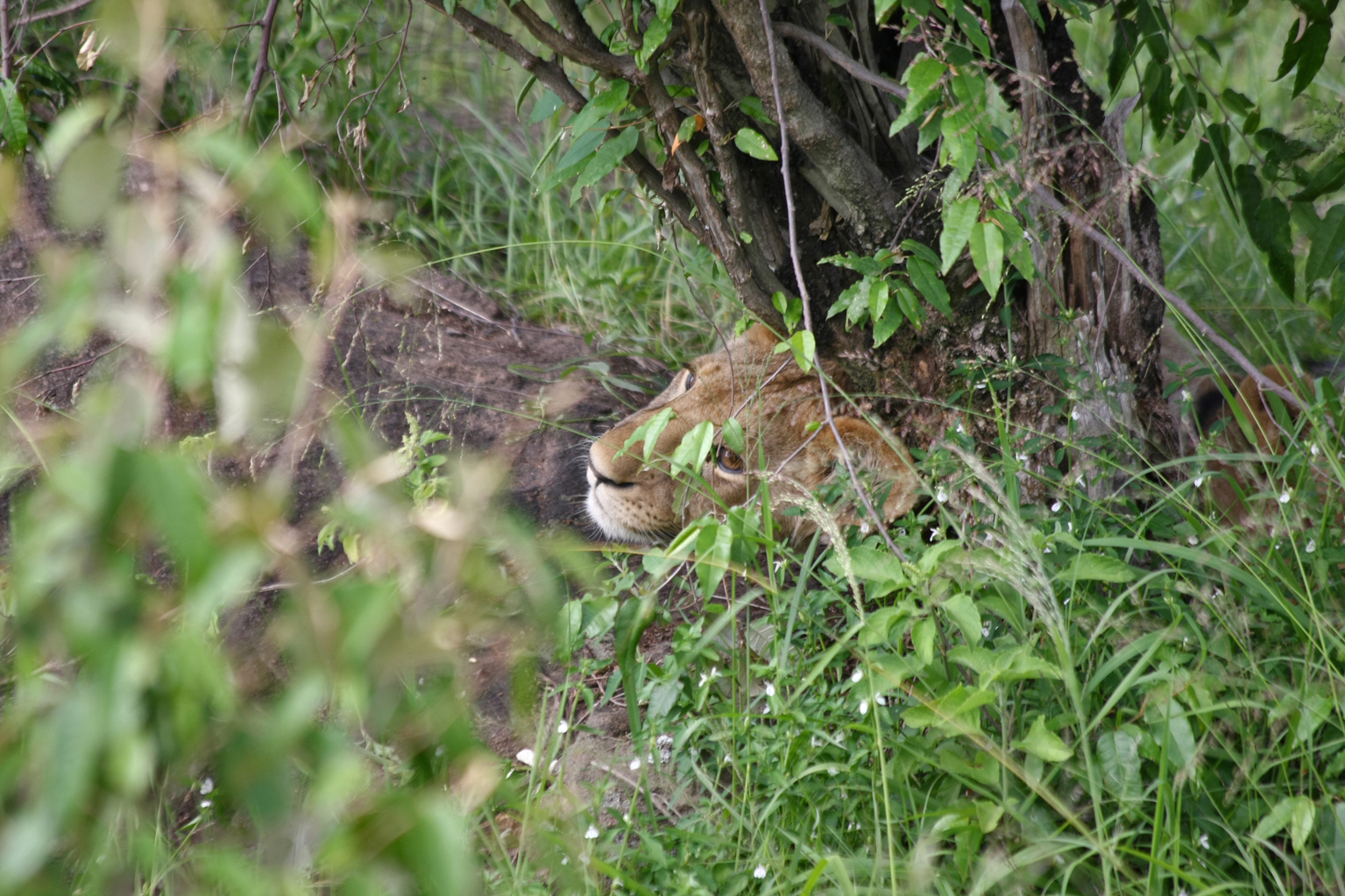
We made a detour around the rocks and just by chance we came across the cubs before the females got there, they were hiding, as sensible cubs should when they are by themselves. I just managed to capture the head of one cub before we heard the approaching females calling out to the cubs. As soon as the cubs heard the call, they all came out and ran over the rocks towards the sound. They were so happy and excited to see their mothers.

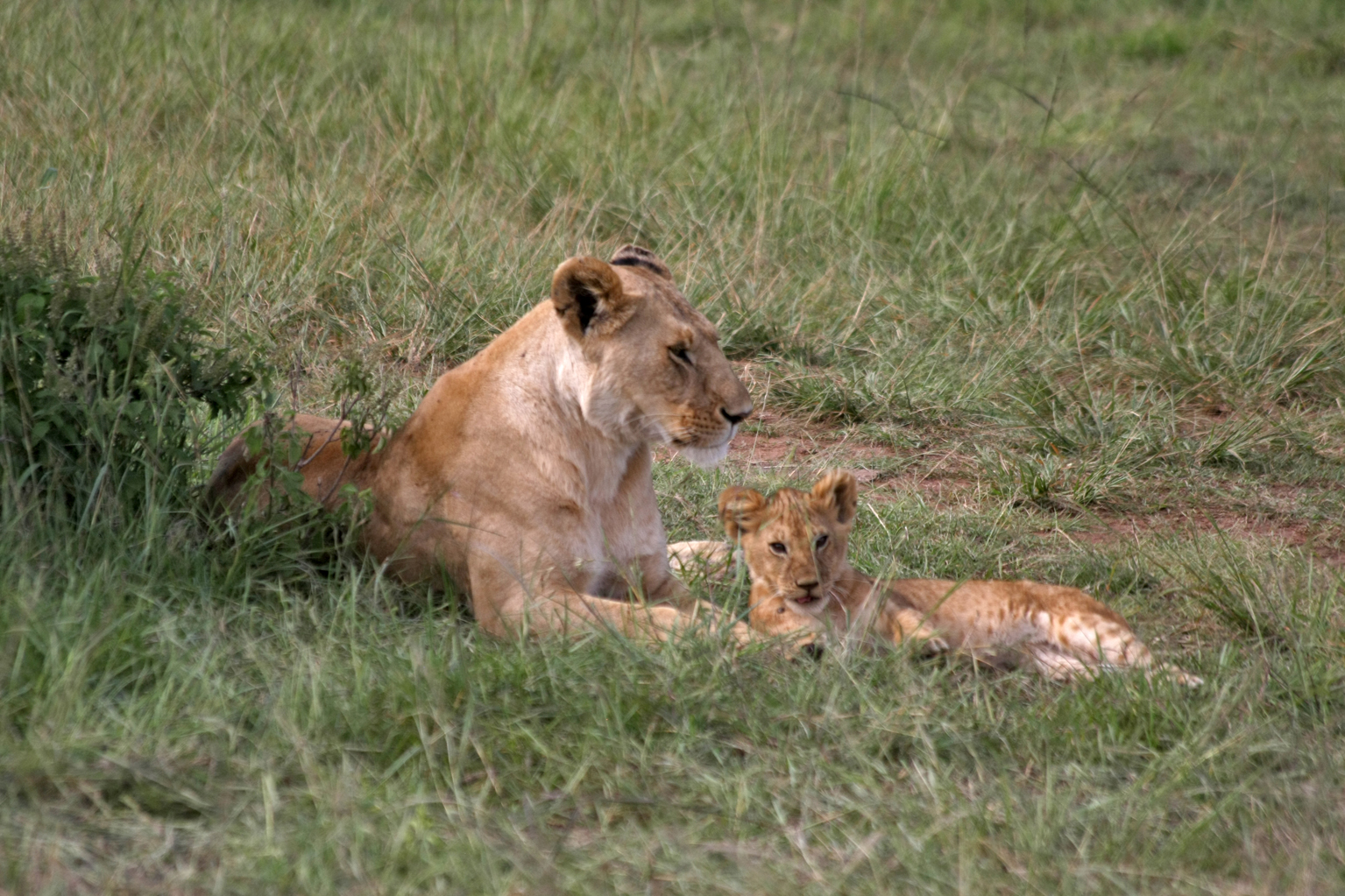
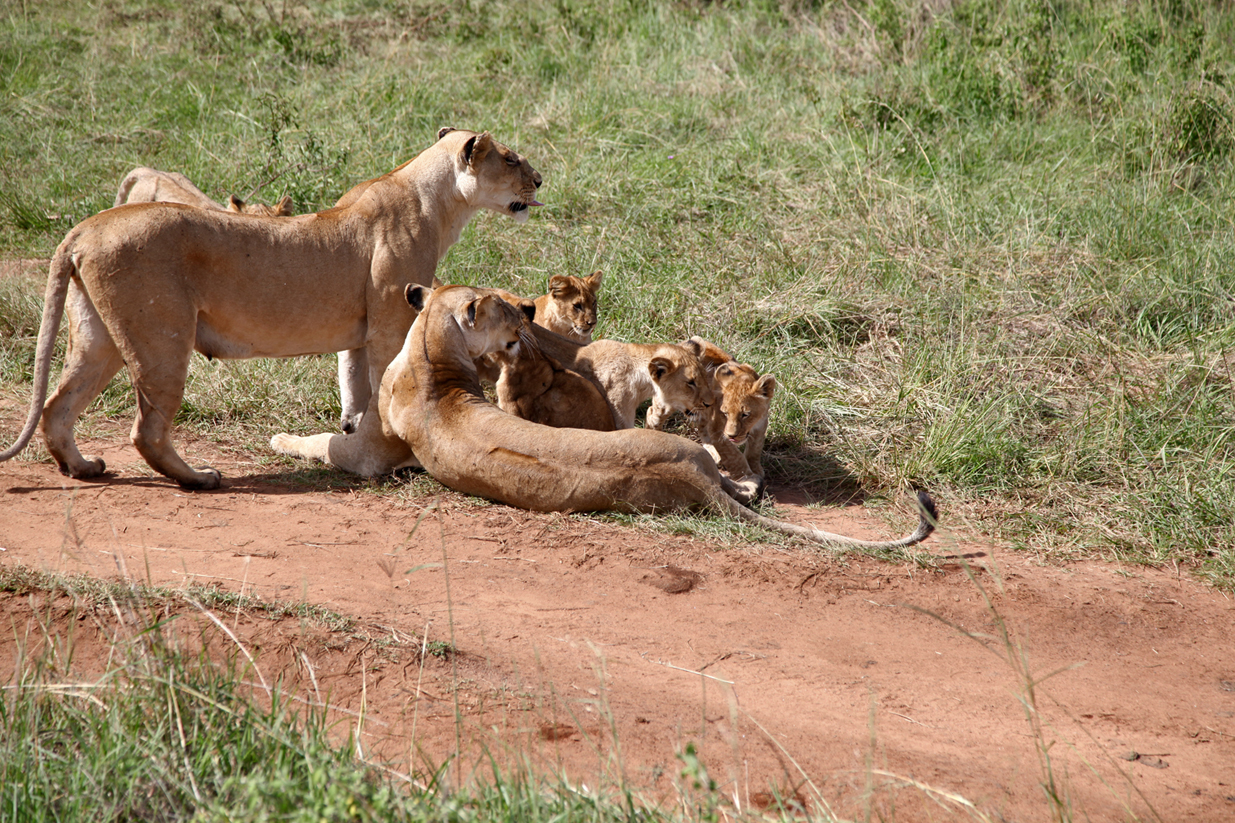
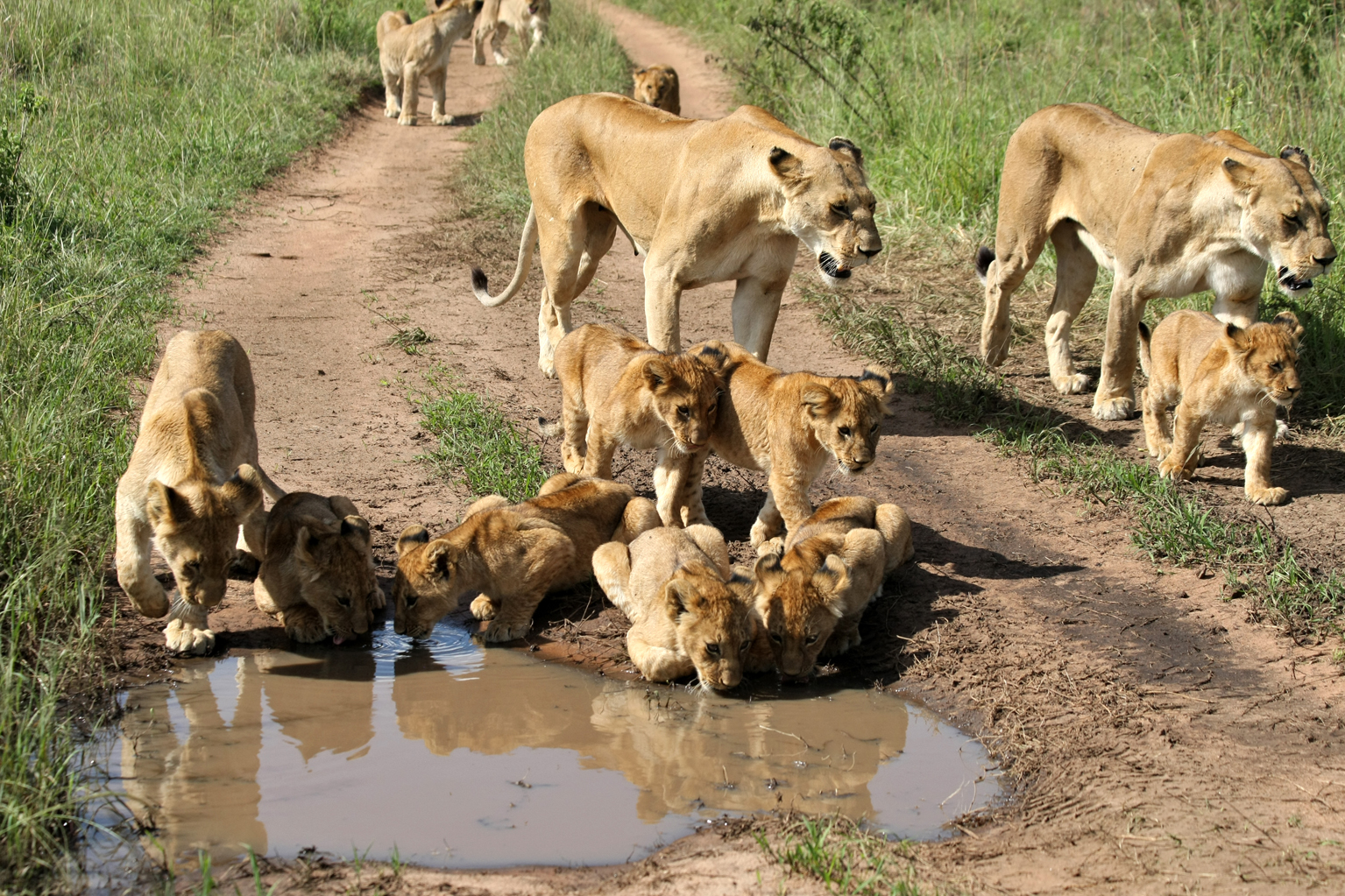
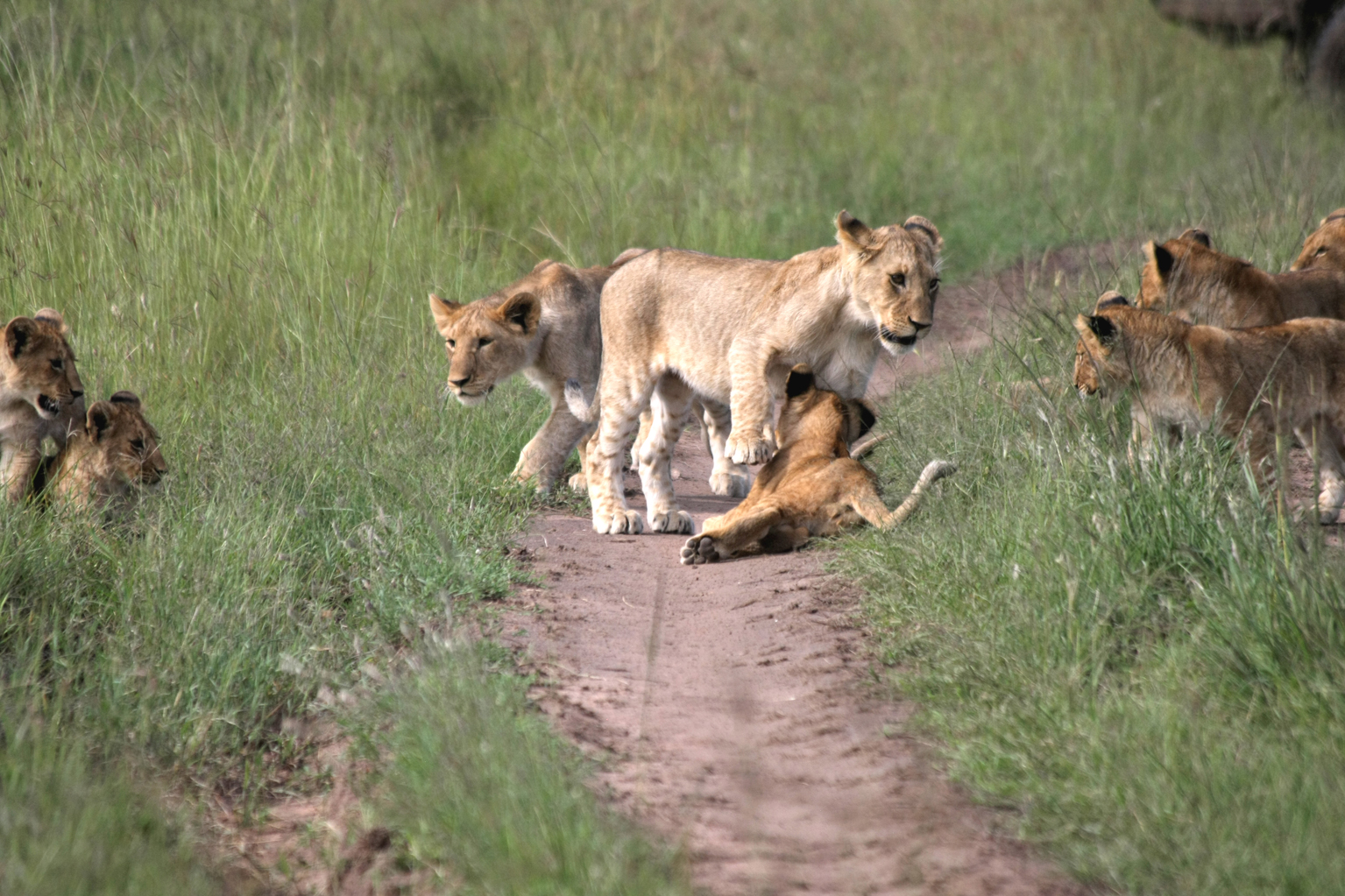
Altogether there were the four mothers, eight young cubs and two slightly older cubs. After they were all re-united and the cubs had been given lots of attention the mothers got up and started to lead the cubs away. They were not leading them to a kill so they must be taking them to a new den. Lionesses often move their cubs to a new den to keep them safe from predators.

So, we follow them for a while together with all the other photographers as they walk along the road, playing and jumping on each other and their mothers, the cubs are so cute you just can’t help taking lots of photos of them. I’m really going to enjoy following these cubs as they grow, watching all their ups and downs of life. Finally, it was time to leave them and head back to camp, they hadn’t yet settled on a new den so we will have to start looking the next time we are out.

Categories
Blog

Sopa Pride

I’m excited this morning, we have decided to go on a game drive, conditions are still pretty bad in the park and there are large areas that it’s not wise to go to, but we will see what we will see.

There is a lot of mist in the air this morning, it makes the sky in the east a beautiful crimson colour where the sun is about to rise. In minutes it changes to a vibrant orange, then yellow before the sun appears above the horizon diffuse in the heavy mist.

We leave camp by the top road this morning, this is where Alison keeps his cows, one of which is mine, with a small shed for the calves to keep them safe at night. For the last three nights there has been a lioness in the area looking for an opportunity to have one of the cows for a meal, they are an easy target. Half an hour after leaving the camp Alison gets a phone call to say that the lion has got one of his calves, they had just been let out to play and one of them wandered over to some bushes when the lion rushed out and grabbed it, when they saw what had happened the Maasai chased the lion away, but unfortunately it was too late for the calf. So far, over three nights the lion has claimed two cows, a calf, and a donkey.

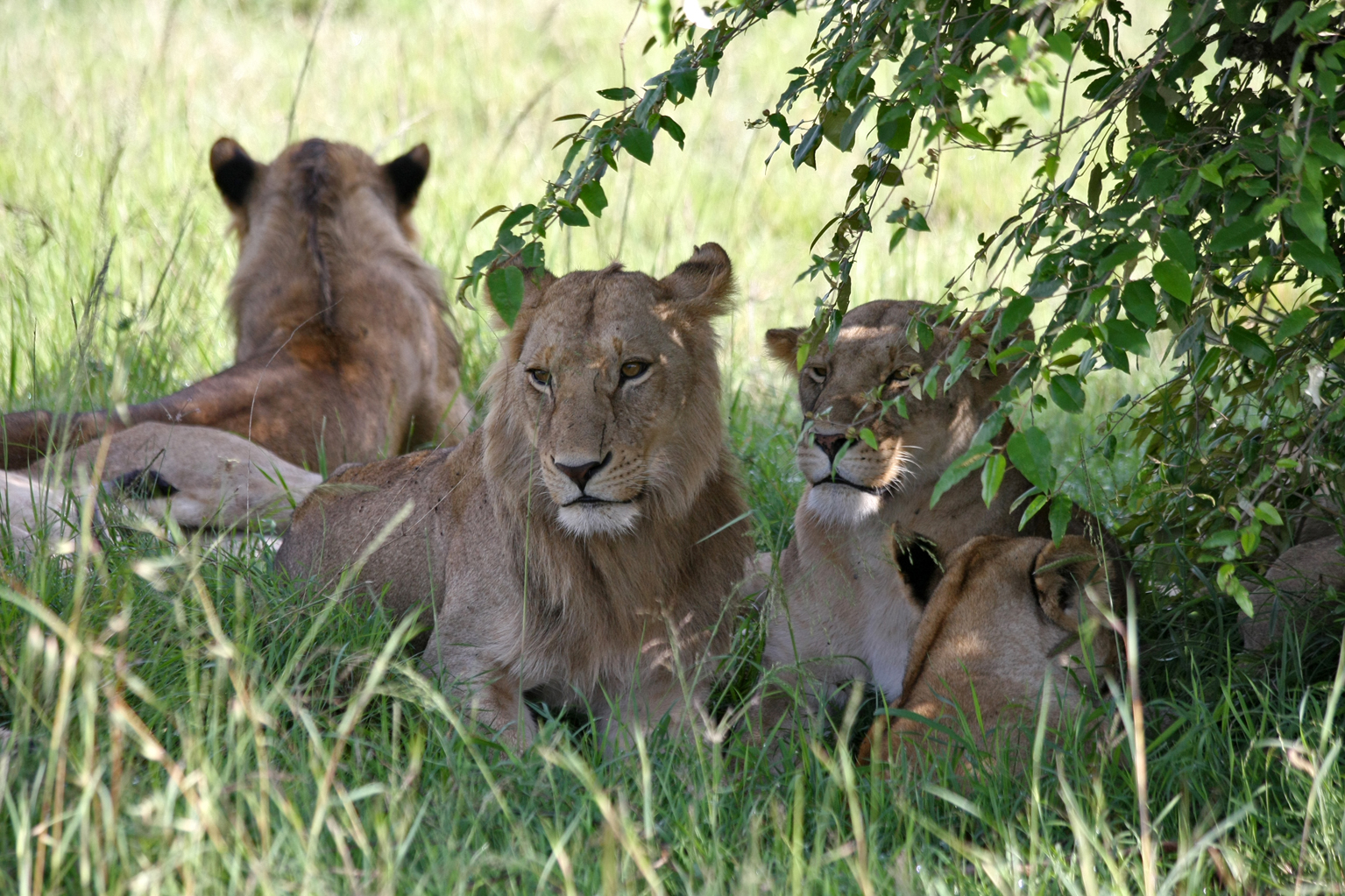
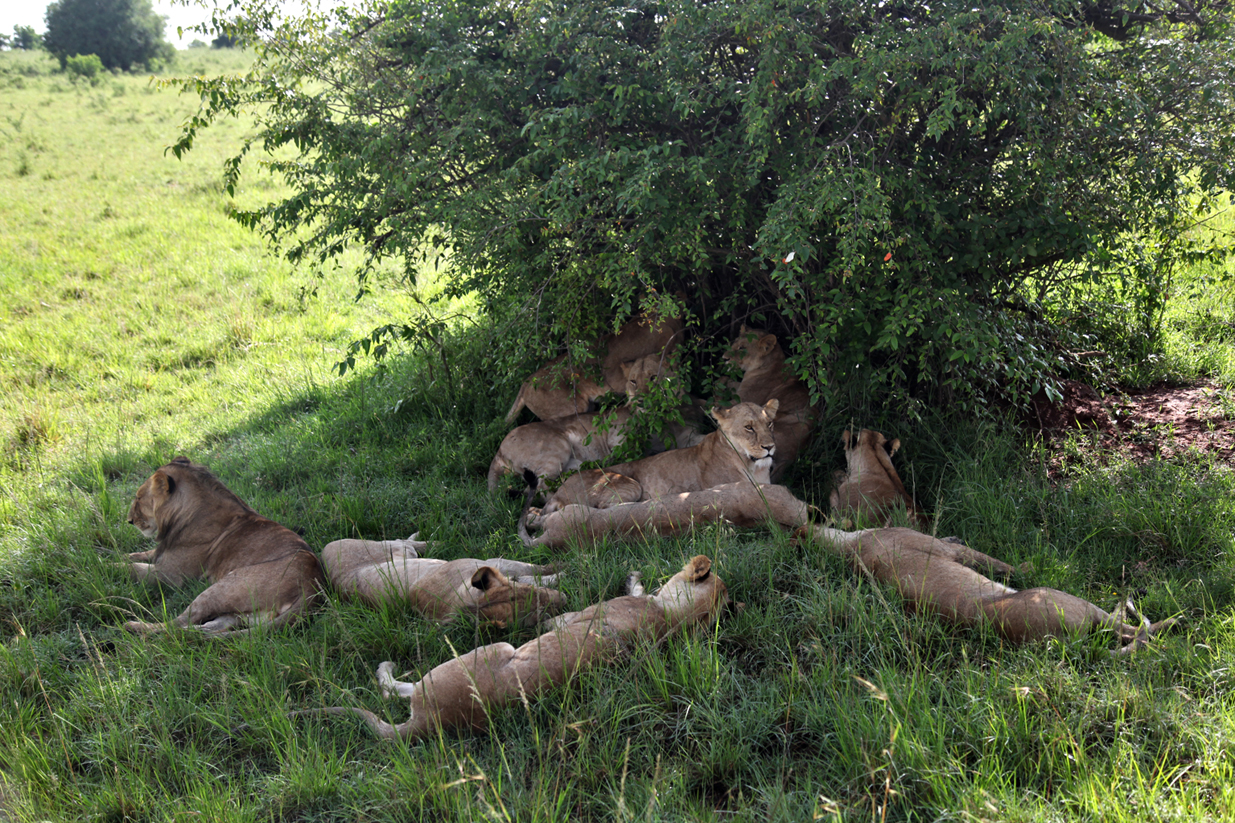
Sticking to the main roads as much as possible, we see three vehicles in front of us turn off onto a muddy track, so we do something we don’t normally do, we follow them. After all, in these conditions no driver would choose to use a mud track and risk getting stuck if there wasn’t something to see other than zebra and antelope. At first it just looked like a couple of lions, then on closer inspection of the area we picked out another, then another until altogether there were twelve of them. This is one half of the Sopa pride.

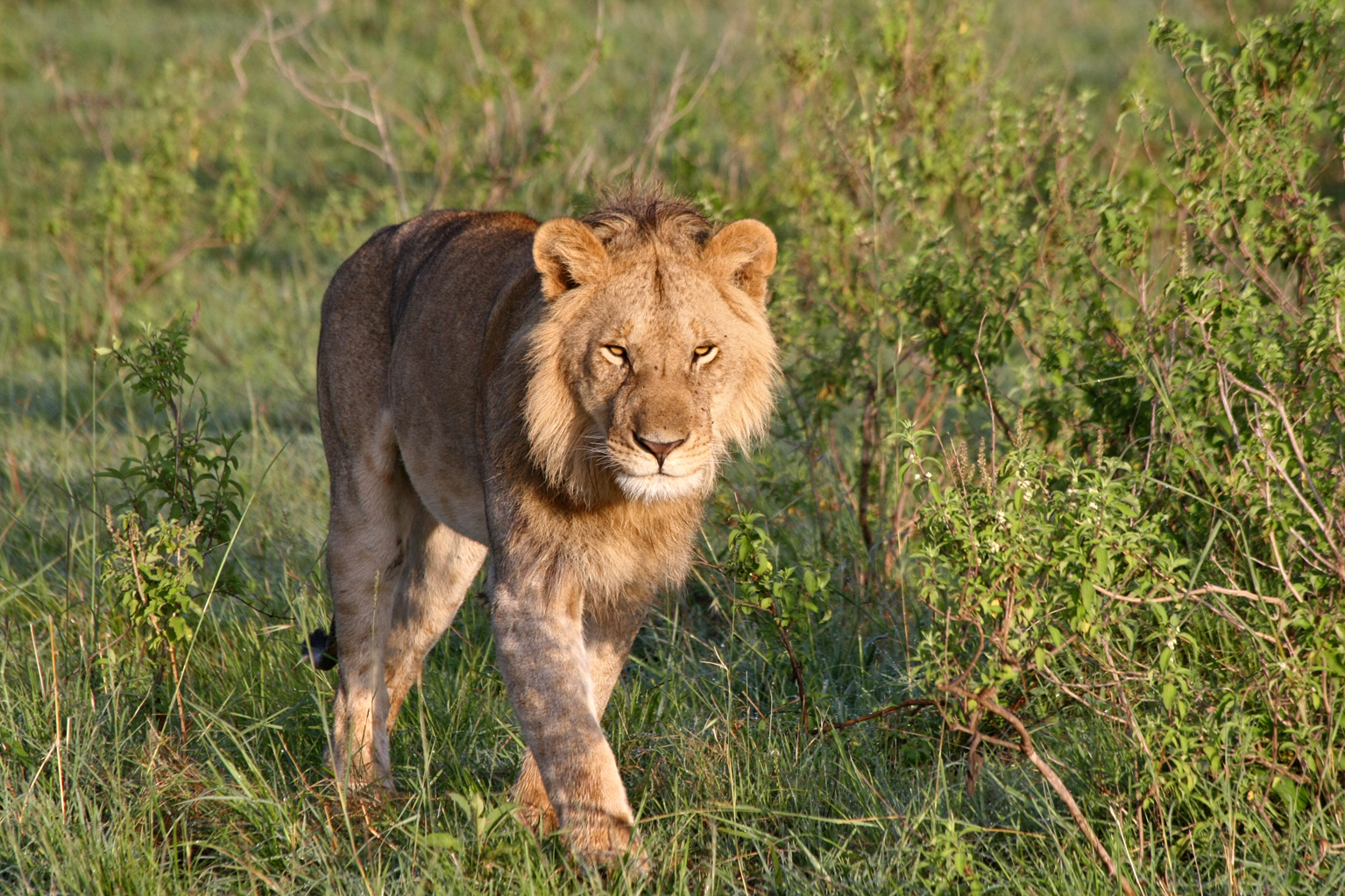
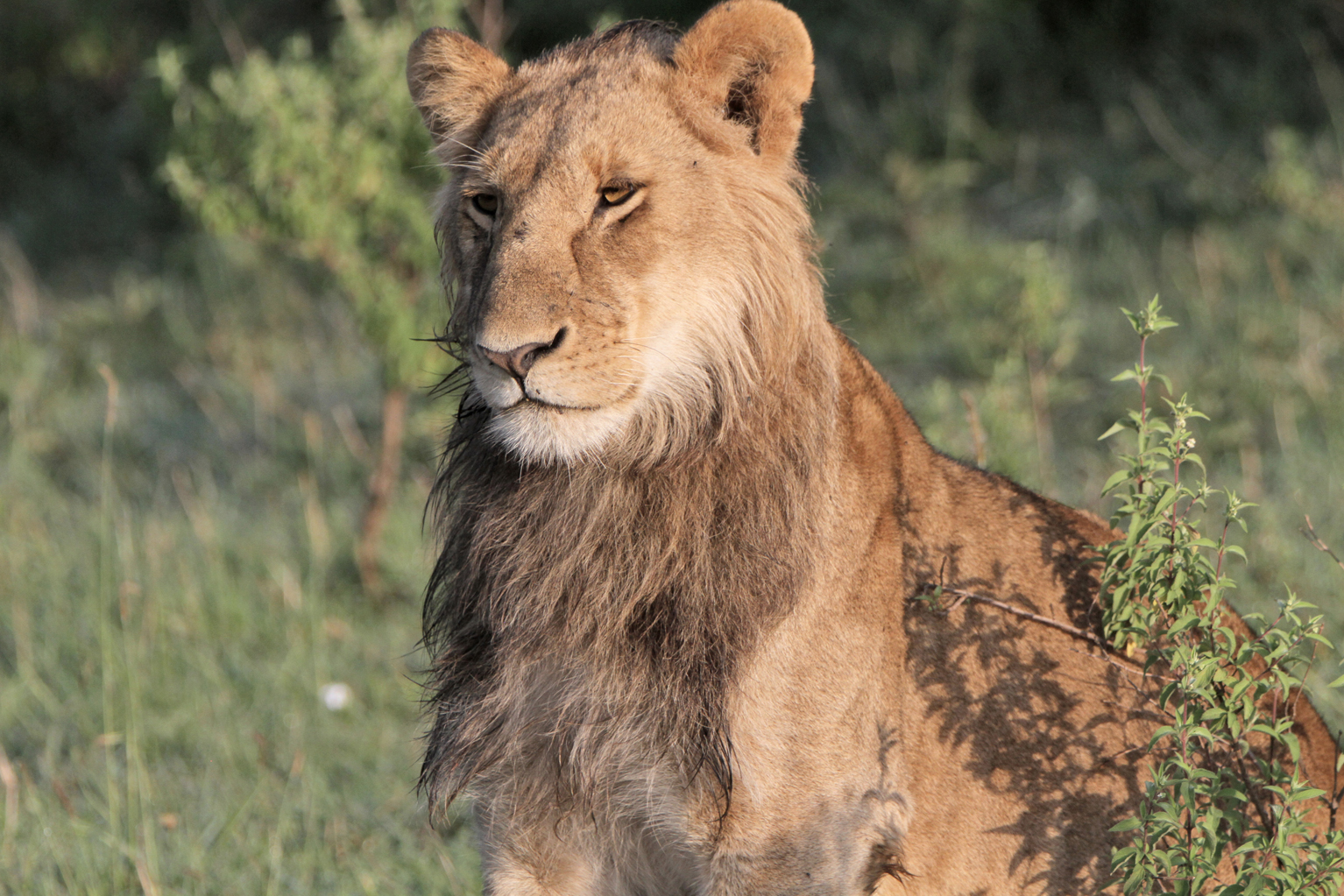
The Sopa pride was one of the largest prides in the Mara numbering forty-two, just before the pandemic they split, forming two groups, we were looking at the smaller of the two groups. There are no young cubs in this group, not yet anyway, but there are several male sub adults that have not yet left the pride. You can see from the photo’s that they are growing into fine males and I’m sure it won’t be too long before some of them will want a pride of their own.

This morning they haven’t yet eaten, and they are looking around, after a short while they start to move, first the lead female, then one by one they get up from their resting places and follow until the whole pride is on the move. It’s really something to see a pride of lions striding confidently across the land, like it belongs to them, and it is their land no question. We follow them as they head down to the river and across the bridge paying no attention to all the jeeps that are piling up behind them.

They head into thick bush Alison still thinks they may hunt, so we drive ahead, guessing where they may come out.

We get a clue from a herd of Giraffes. Being tall they can easily spot the lions from quite a distance and although they don’t run from lions they do stand and stare at them, never letting them out of their sight. This means we could be sure from which direction the lions were coming. Lions won’t attack fully grown Giraffe, especially when there is a group of them as they have a powerful kick that can seriously damage or even kill a lion. Close by was a herd of Topi including a few babies that were sticking close to the Giraffe for protection.

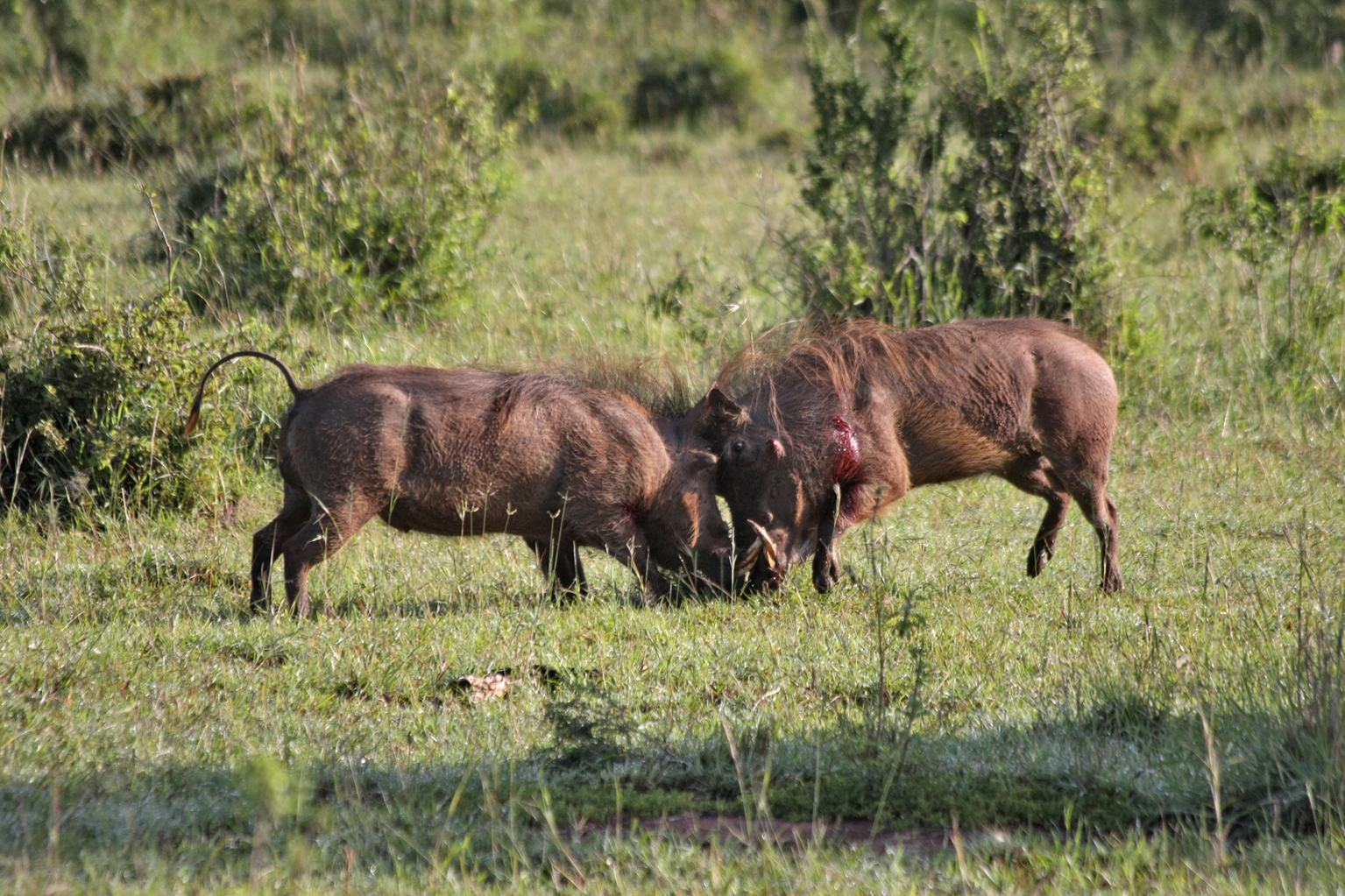
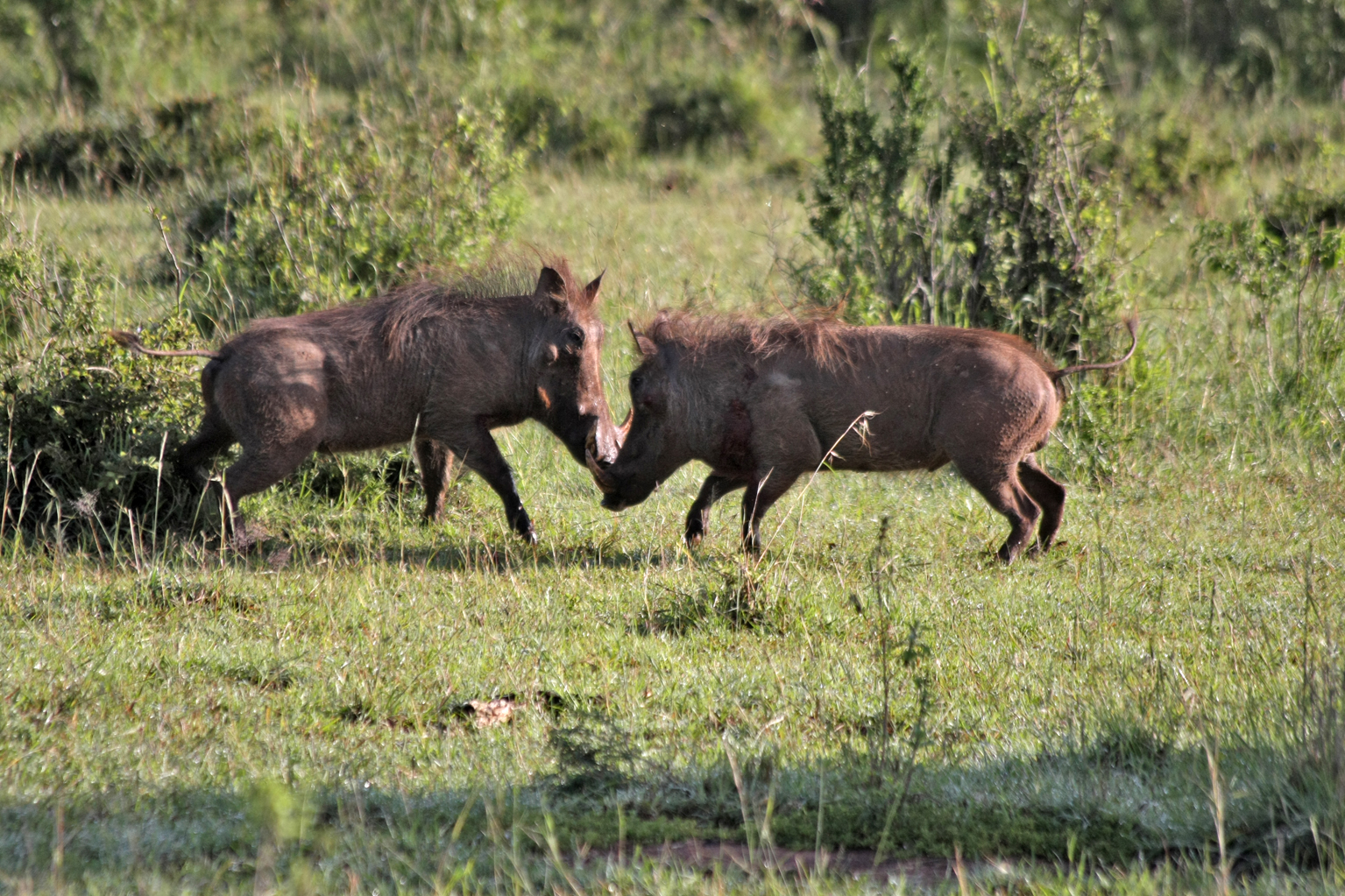
Alison pointed out two large male warthogs that were fighting. Warthogs generally fight for mating rights and for dominance. They face each other head-to-head then push each other to see who yields first, however it can get nasty when they use their sharp tusks to try and topple their opponent, you can see the warthog on the right has been punctured by a tusk just above his leg and is bleeding. The two were so involved in their fight that they were oblivious to the drama unfolding to their left.

The lions had arrived and were chasing the rest of the warthog family who managed to escape into their den before the lions reached them.

That didn’t stop a couple of the lions trying to get down into the den after them. Once the two male warthogs realized what was happening, they stopped fighting each other and took off. It doesn’t matter who is the stronger when there are lions around.

The lions hadn’t managed to get a meal and the day was getting warmer so instead they settled down for a rest in the shade of a tree, maybe they will try again later in the day.

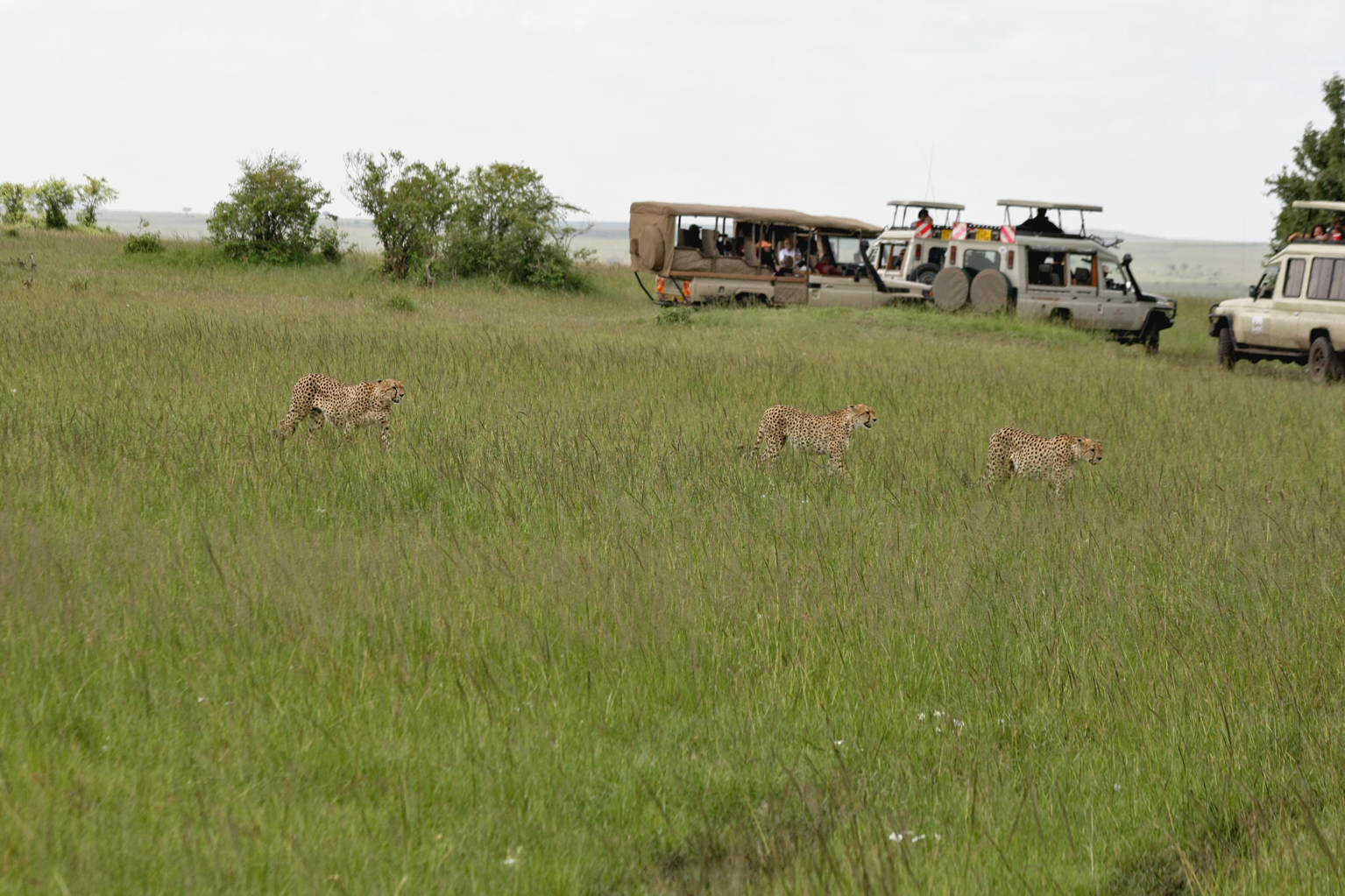
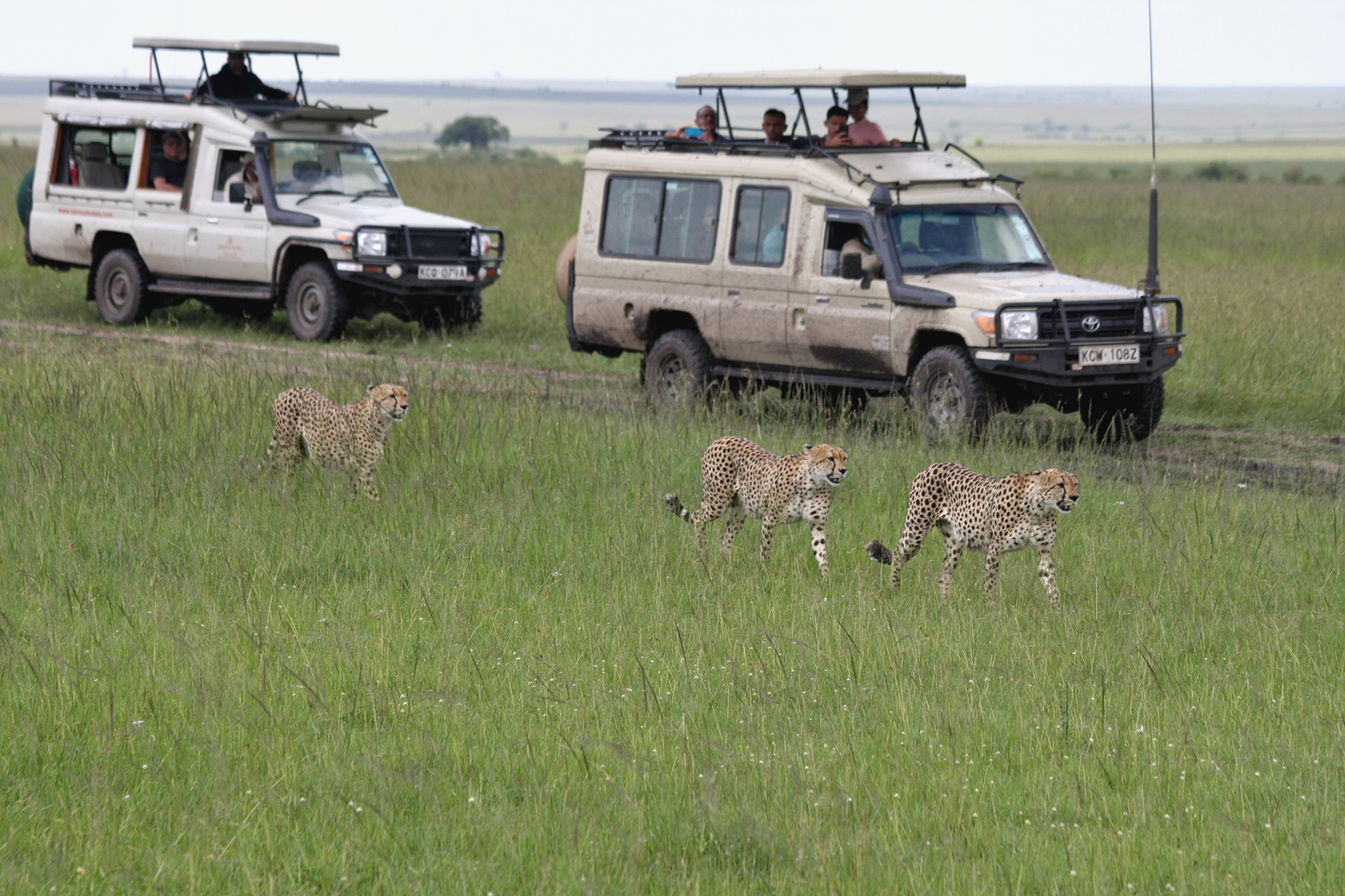
There we left them and headed off towards the Talek area to see if we could find the three cheetahs, Tatu Bora.

When heading toward Talek the landscape changes from an area of rolling hills and thick bush to immense expanses of wide-open plains covered in tall grass due to the recent rains. Only last month this grass was like straw laying flat on the ground, now revived by the rains is standing up straight in vibrant greens and browns, making it difficult to spot any wildlife that may be there.


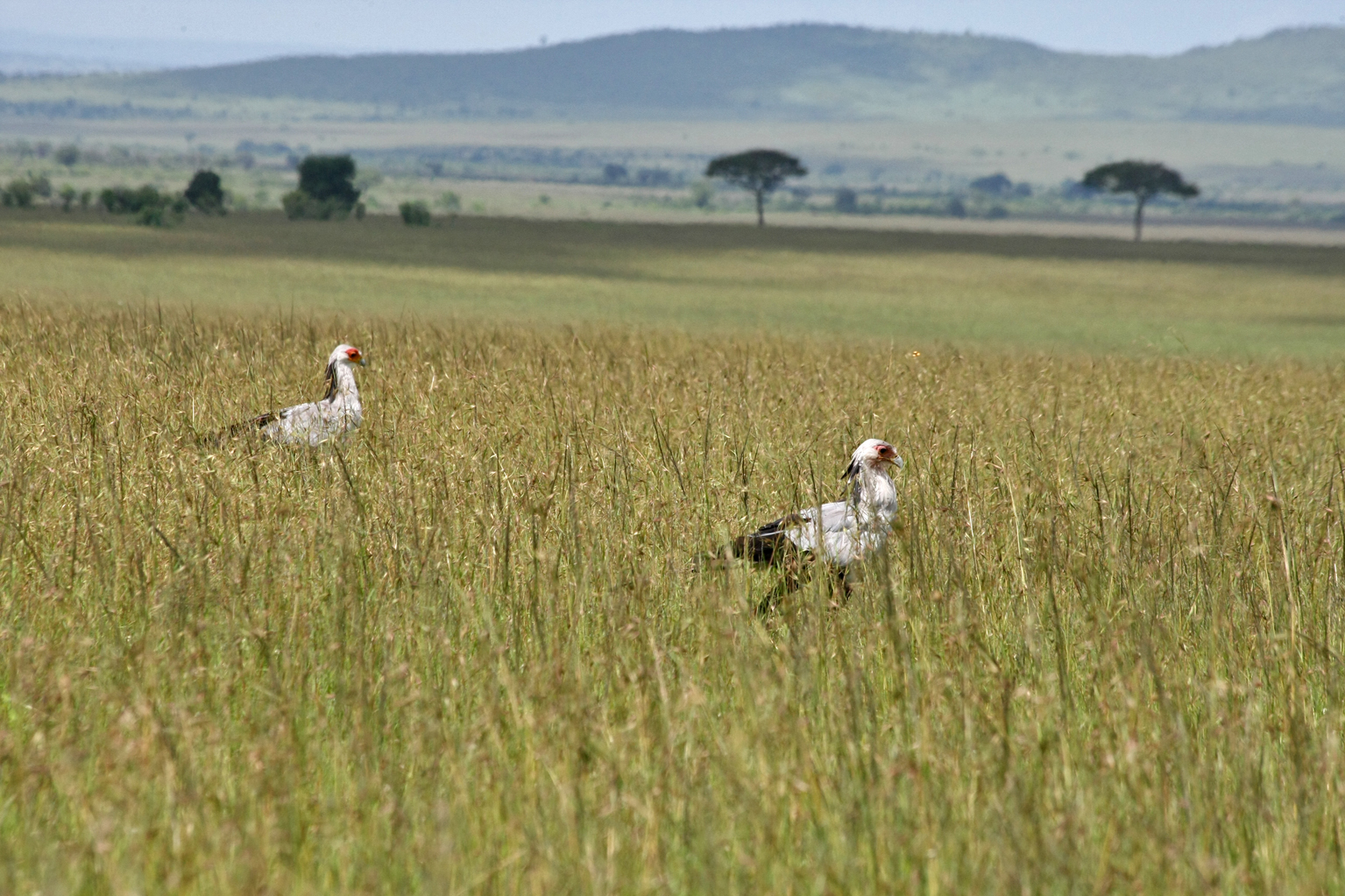
Every now and then a bird is spotted, like the secretary bird, the grey crown crane and the ostrich that stalk through the long grass looking for insects. Sometimes you see horns of the antelope sticking up out of the long grass where they are very well hidden. Occasionally you see one standing like this very lovely waterbuck who is in his element in this waterlogged terrain.

The cheetahs have been spotted in an area that is accessible for a 4-wheel drive, but only just. The tracks in the Talek area typically turn to thick black, slippery mud. When we arrive, there are already around 30 Jeeps surrounding and following the cheetahs, all vying for space, how these vehicles didn’t slide into each other I don’t know, I saw one jeep do a 360 degree turn before the driver got it under control again.  I think there are so many vehicles because the areas that are still accessible are few in these conditions, so everyone ends up at the same place.

I felt sorry for them, we took a couple of photos then left. It was now time for lunch, so we headed over to the sand river area leaving the madness behind.

The morning had been very enjoyable. I will write about the afternoon adventures in the next blog.

Categories
Blog

At Home in Fisi Camp

Once again, we are confined to camp because of the weather. It has rained almost everyday for around 2 weeks now; the rivers are high and many of the tracks in the Mara impassable. Even our small river that marks the boundary with the park is, at the moment, a raging torrent. I can even hear the rush of the Sand River which is 5km from our camp. So, this week I am going to write about the animals closer to home, in the camp and surrounding area.

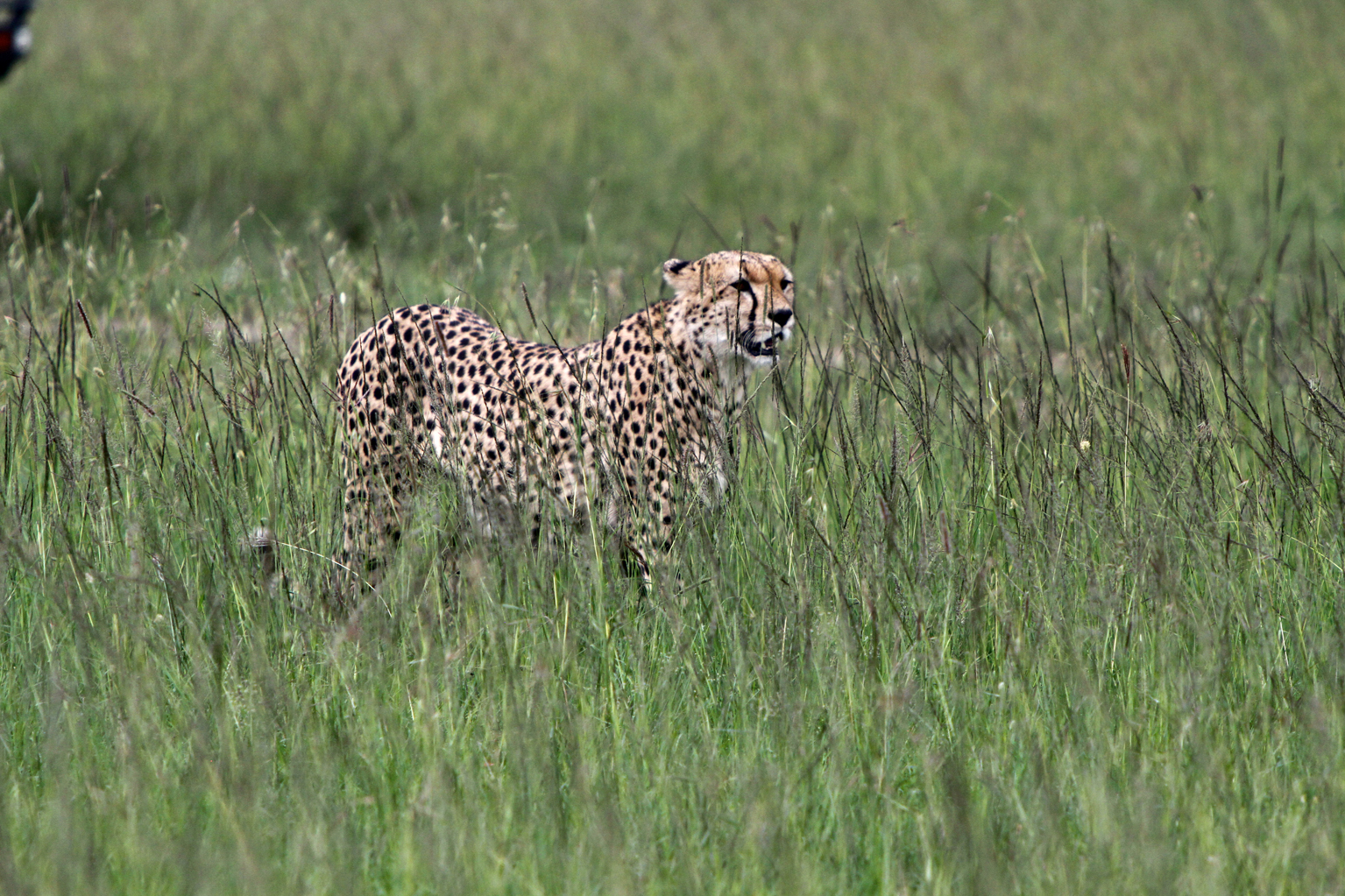
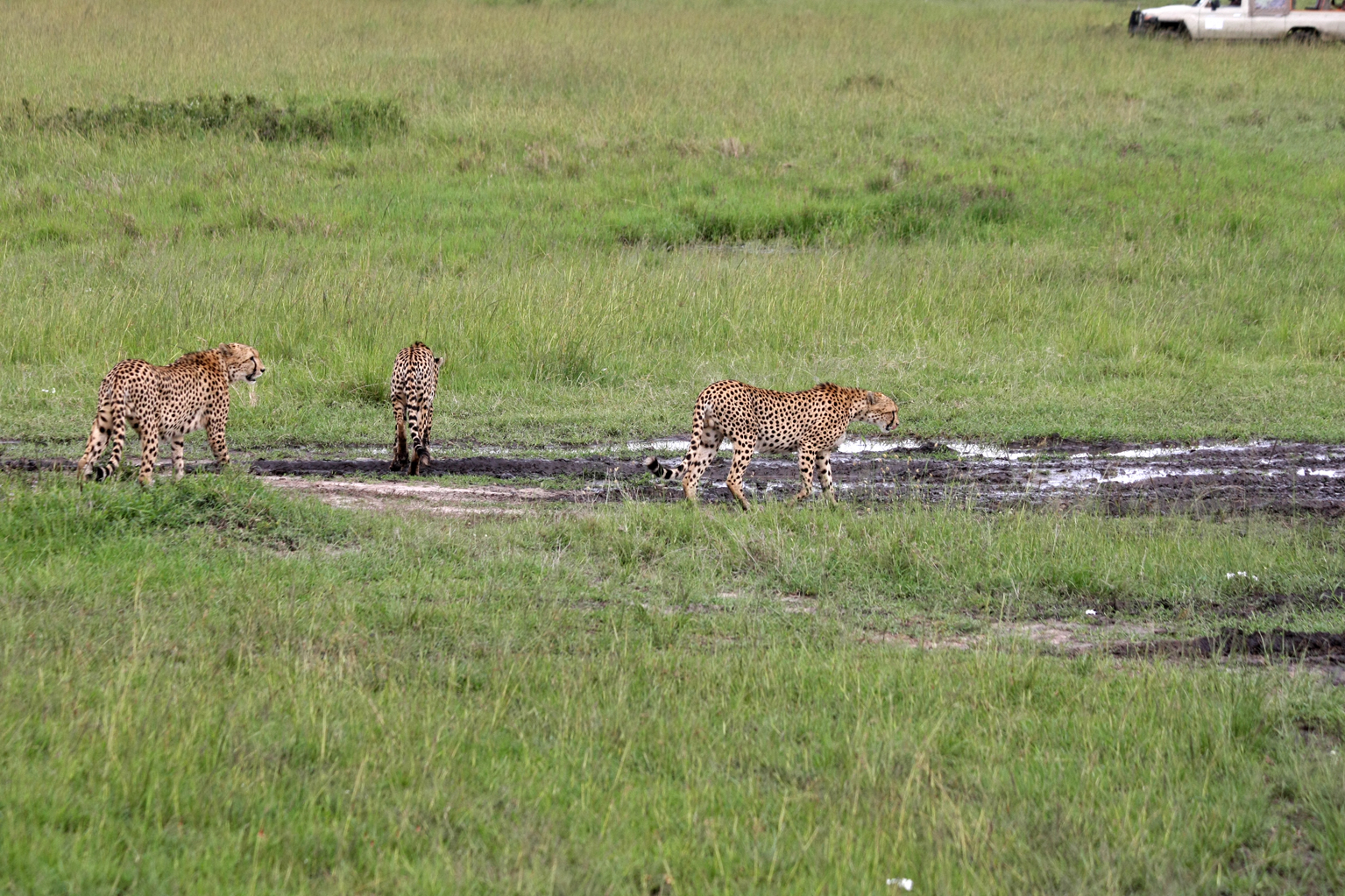
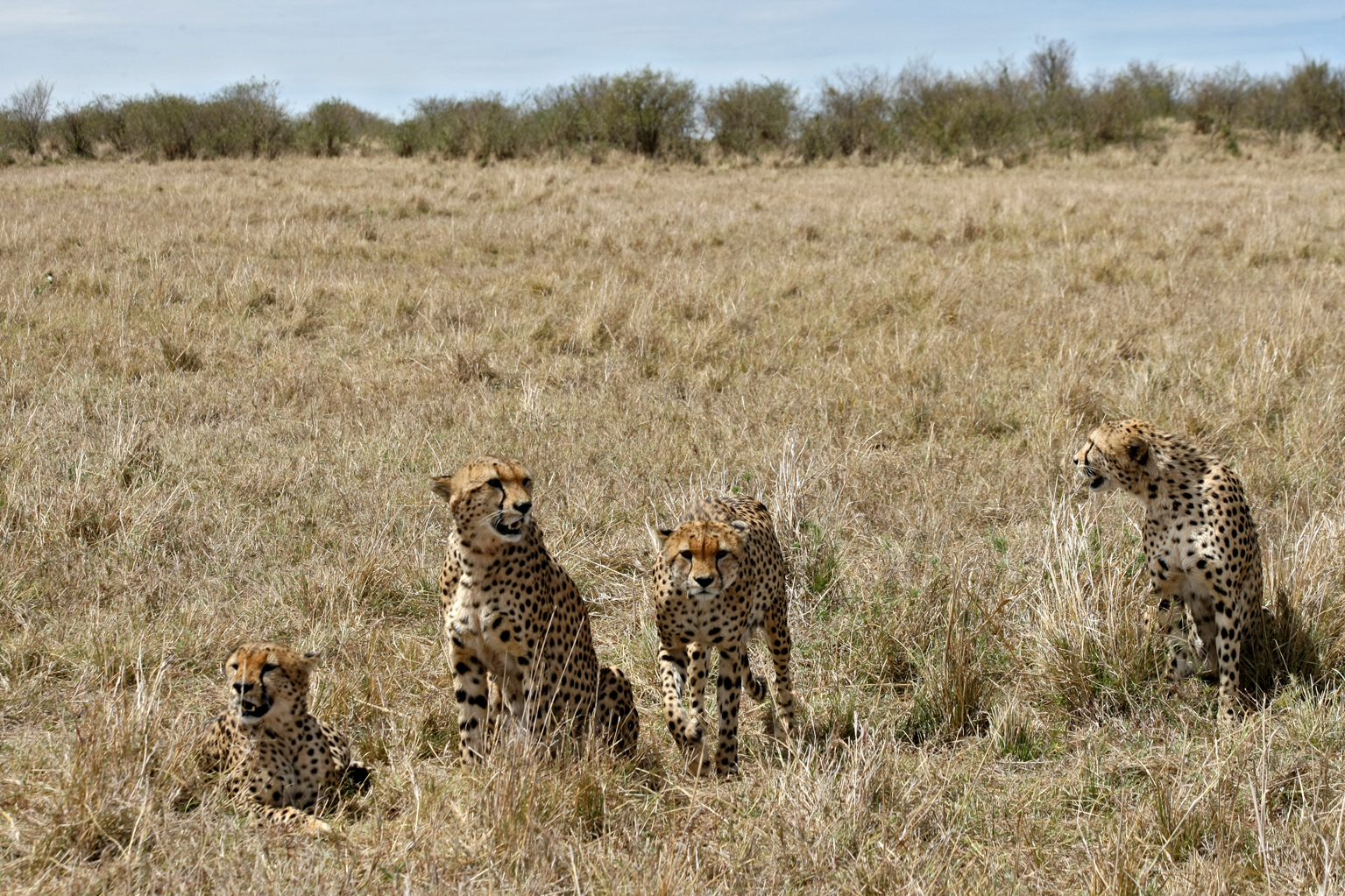
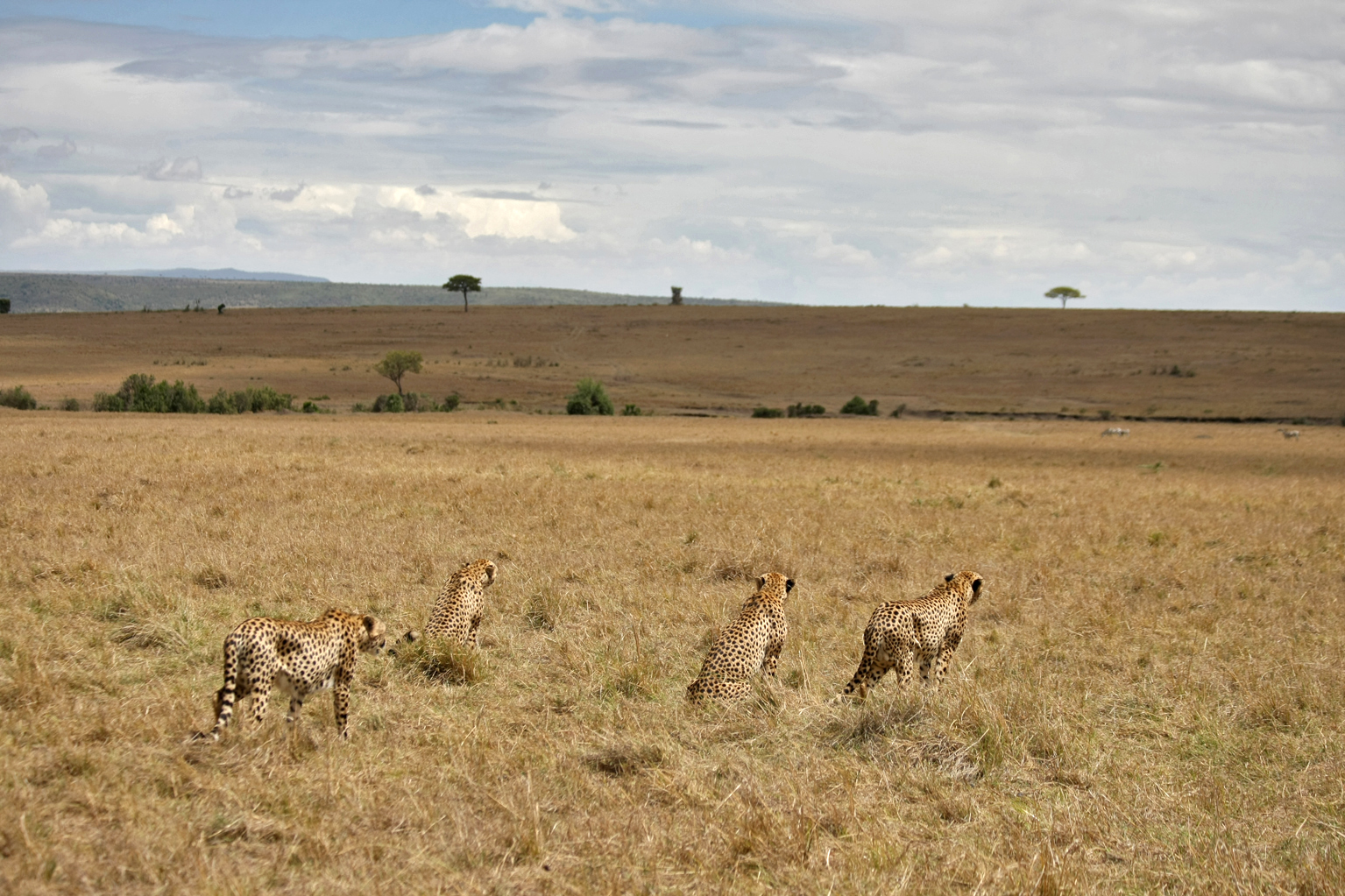
But first a bit of sad news reached us this week. Olarishani, one of the male cheetahs from the Talek area that was part of a coalition has died. They were known originally as Tano Bora, the magnificent five, however one of the boys left, then was later killed by the others when he tried to return, so they were then Nne Bora, now this one was killed when trying to cross the Talek river. The river was high and as he crossed, a crocodile hiding in the water snatched him. These photos were taken when there were five of them, having taken down a Topi, and then when there were four on the hunt again. I will try to catch up with the remaining three on my next game drive. Hopefully next week.
Some good news though, we have heard that Roho the young Leopard that lost his mother is doing well and hunting for himself.

So, this morning I rise early, put some bread in the bird tables outside our house then sit on the veranda, wrapped in a shuka, with a hot cup of tea to keep warm, and wait for the birds to come. What at first sounds like a constant background noise, when I really listen, I can make out the individual sounds of at least 10 different birds.

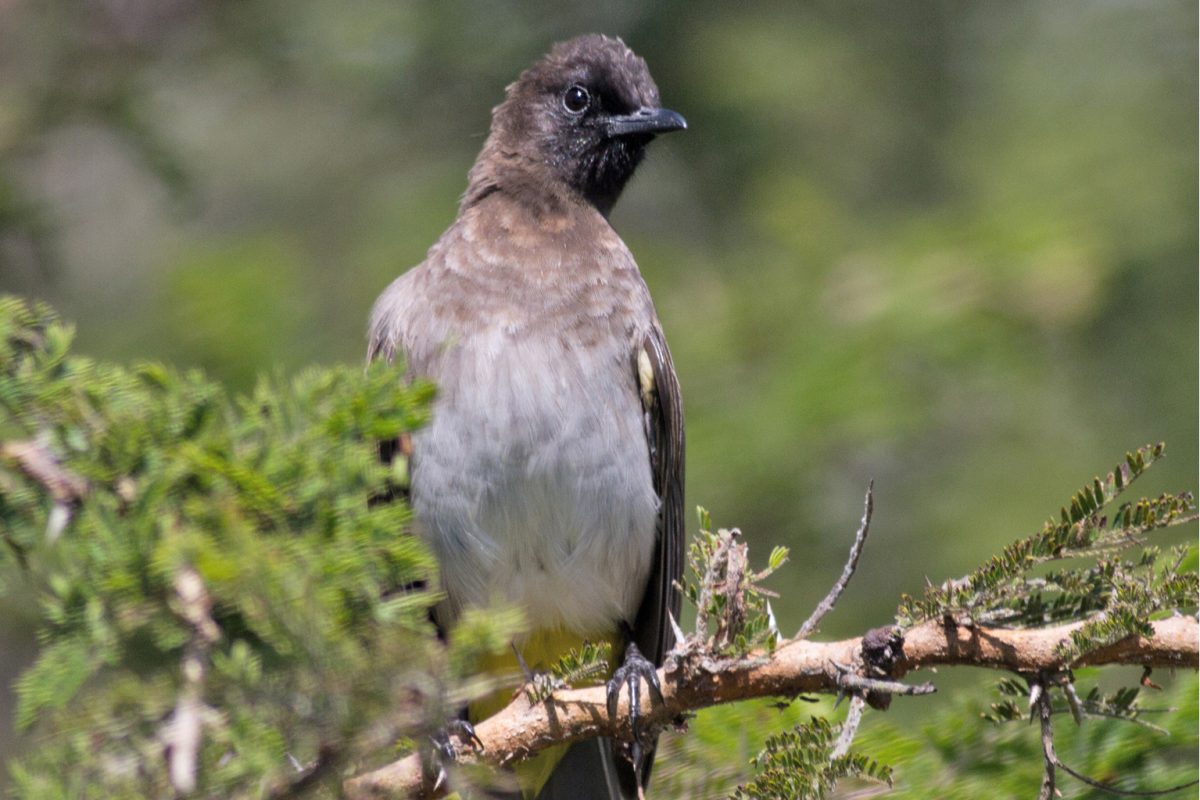
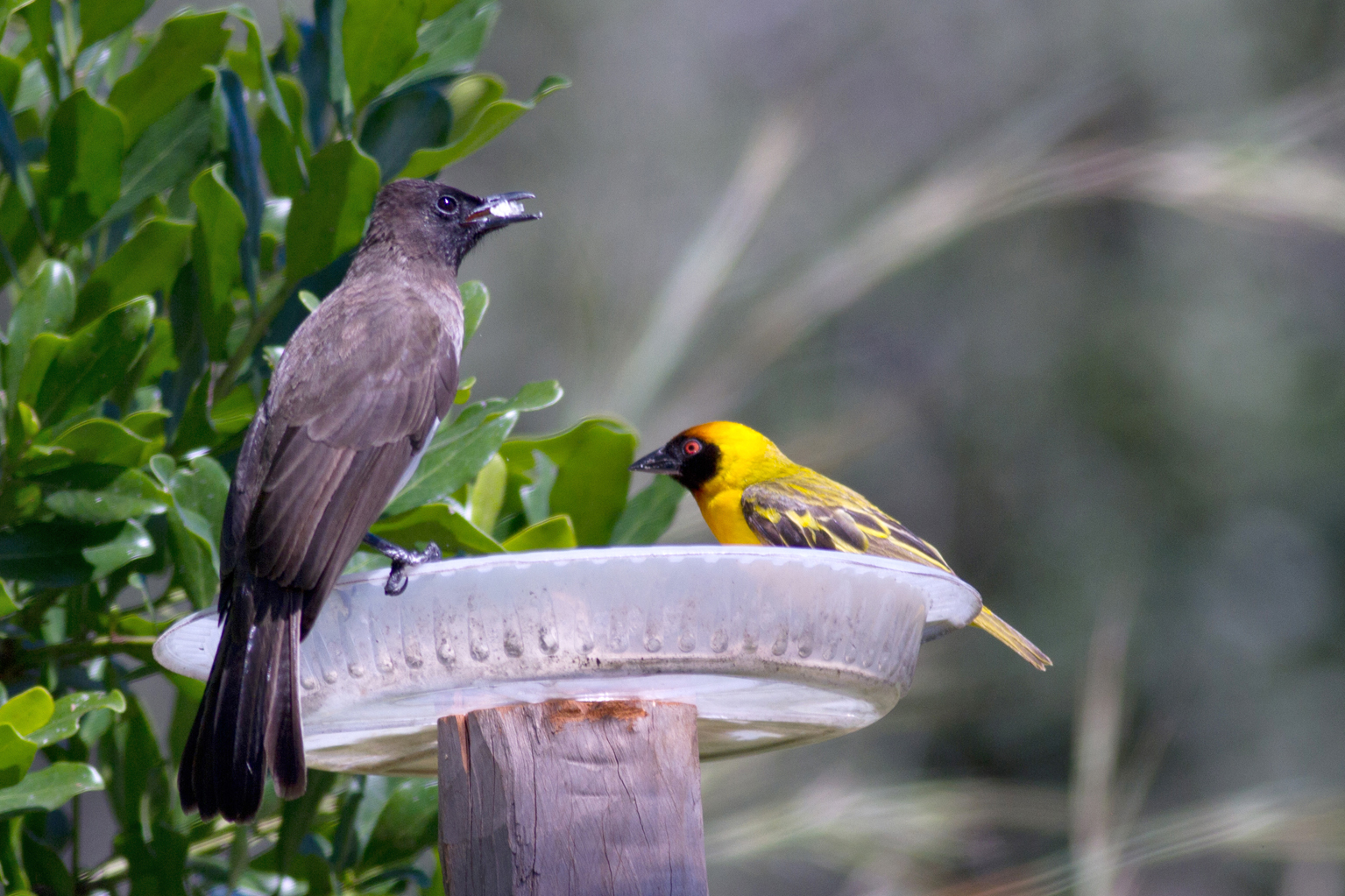
It’s not long before the birds start to arrive, first in are the Bulbul, he is easy to recognize because his feathers tend to stick up a little on the top of his head. Then the weaver, two types arrive this morning, the red headed weaver and the more common yellow one. After this the plain old black bird and a few others that I don’t know the names of. The barbet I easily recognize as he is speckled, slightly bigger than the others and he is also quite aggressive, when he is on the bird table, he chases all others away.

The sparrows are the smallest that come to the table, two of them flew in together, I think it might have been a mother with a young one, although they looked about the same size, one started feeding the other, it was very touching. The sparrows are also quite bold as we get them flying into the dining area when the guests have left for their game drive, they come to the tables and pick at the crumbs. We usually allow them to do this before going in to clean. Not too much bigger is the grenadier with its bright red beak and eyes surrounded by blue rings and a russet coloured head.

Three other birds that arrived and perched in the trees next to the table are the starling and two different species of sunbird, these three are very colourful. The starling has a bright blue back and chest with a bright red eye, the scarlet chested sunbird is completely black apart from a bright scarlet patch on his chest as the name suggests, but the most vividly colourful is the other sunbird with an iridescent blue and purple on the head and chest and a bright yellow underside, absolutely captivating. I nearly forgot the little bee eater; he is also nice and colourful with a green back and yellow front.

Finally, to the table comes a small scruffy looking widowbird, he doesn’t stay but picks a large piece of bread and flies away with it. The funniest looking of the birds this morning was the mousebird, he is very furry with a sort of Mohican hair style, big eyes, and a very long tail. He is a devil because he often flies into our shamba and eats the herbs and other vegetables we have growing there.

Most mornings the Dove, or what I call the pigeon comes in, they walk straight on to the veranda to drink water from the dog’s bowl, interestingly the dogs are not bothered by this. What does bother the dogs though are the Hyena. This morning, while still dark, before I had even put the bread out for the birds the dogs ran, barking and howling, to the edge of the clearing, looking into the bush. I shone my torch and stared into the bush and two luminous eyes stared back at me. It was a Hyena, I could just make out the outline of his body at the edge of the bush. Hyena are not afraid of dogs and my dogs were sensible enough not to get too close to the Hyena. After a few minutes he walked off.

Other animals we sometimes get around the house are Zebra, generally at night, the dogs do chase these when they come to close to the house, and also the occasional elephant. When this happens, the dogs keep their distance and stay very quiet. The elephants, as well as the mousebird, like to go into our shamba and eat the newly grown vegetables, they are particularly fond of cucumber.


Later in the day while walking along the riverbank to see what, if any damage the heavy rains had done, I came across this monitor lizard, immediately he saw me he made for the water and disappeared. It is quite rare to see the monitor lizard around the camp, this one must have been at least three feet long from head to tail.

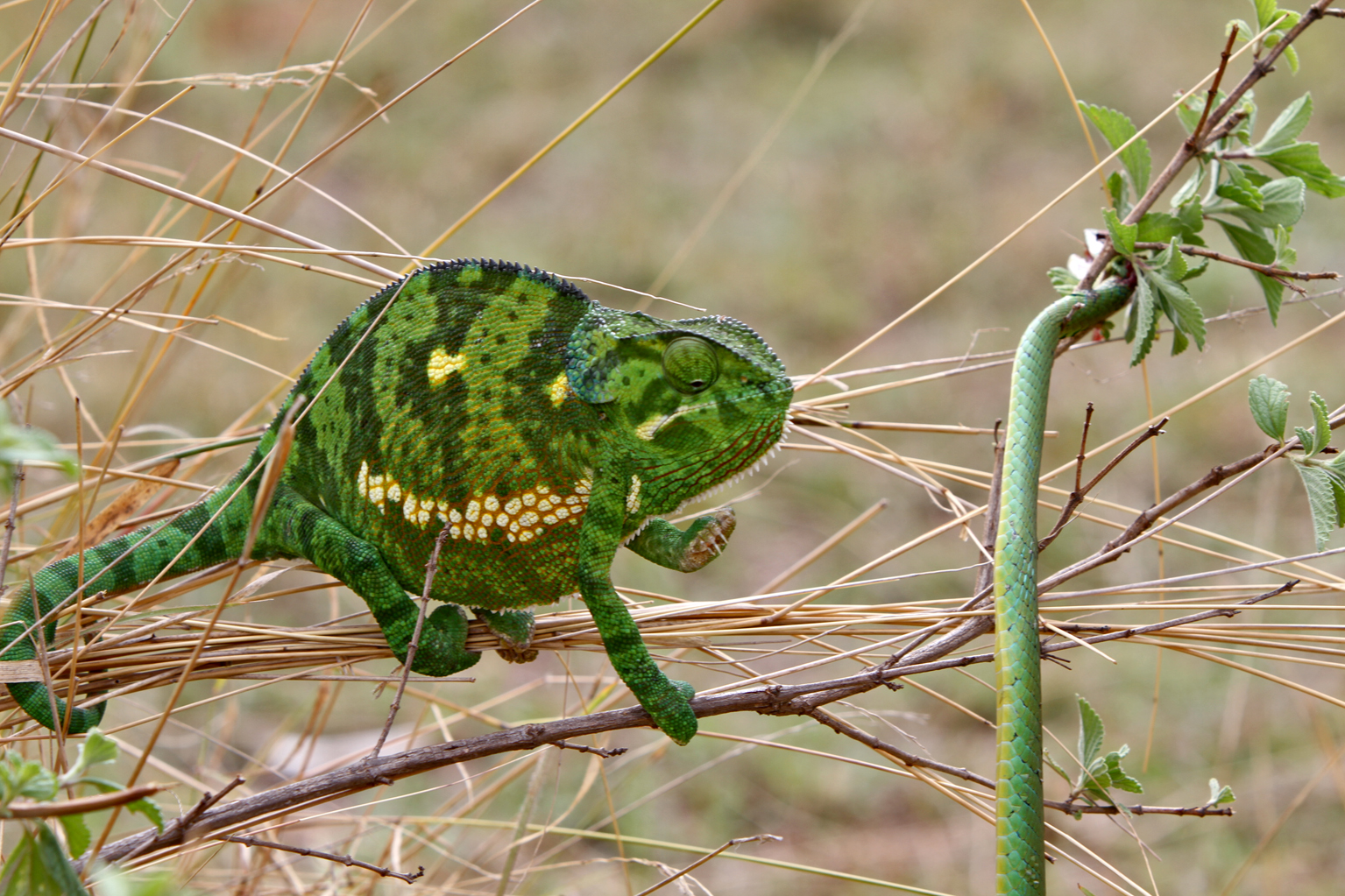
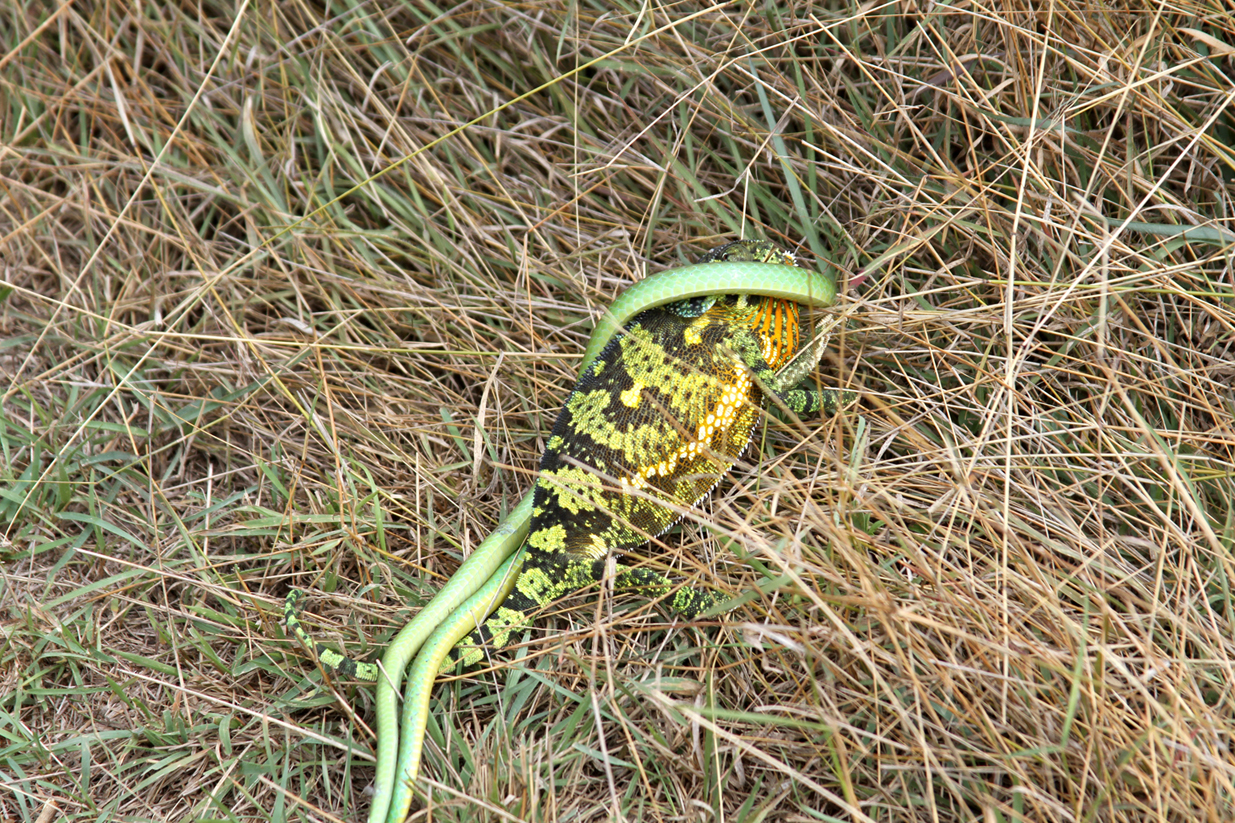
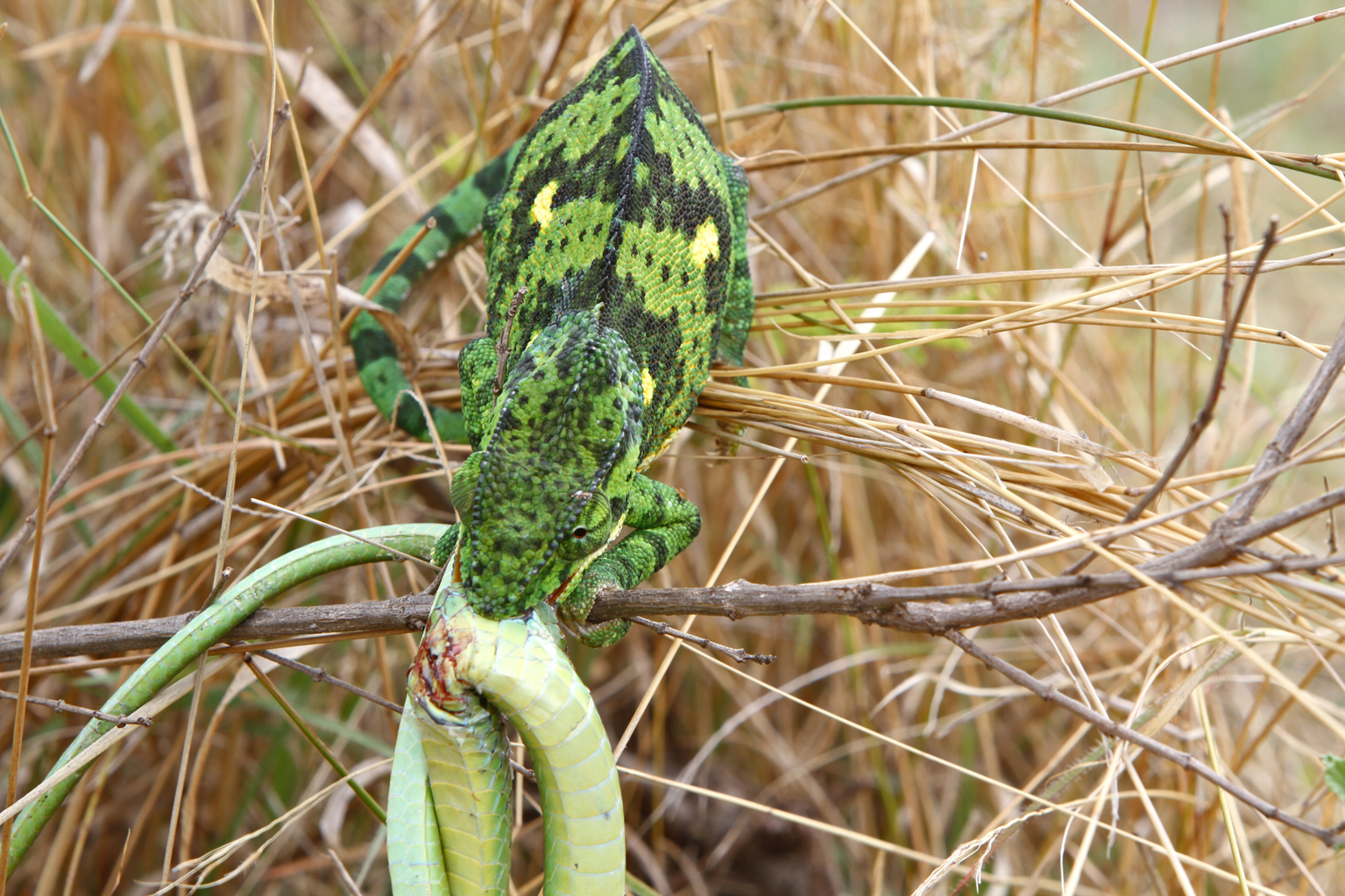
Another animal that we don’t often see is the chameleon, Ken managed to capture this one as it wrestled with a snake. First, they faced each other off, this was a slow process as the chameleon moves very slowly, one limb at a time. The snake clearly wasn’t afraid of the chameleon because at one point it wrapped itself around him, but I think it should have been because the chameleon took a chunk out of him. Chameleons don’t eat snakes, they eat only insects, but obviously they don’t like snakes, maybe they see them as a threat, which suits the Maasai as they don’t like snakes either.